News
WhatsApp Last Seen History: What It Shows, What It Hides, and Why Users Track It
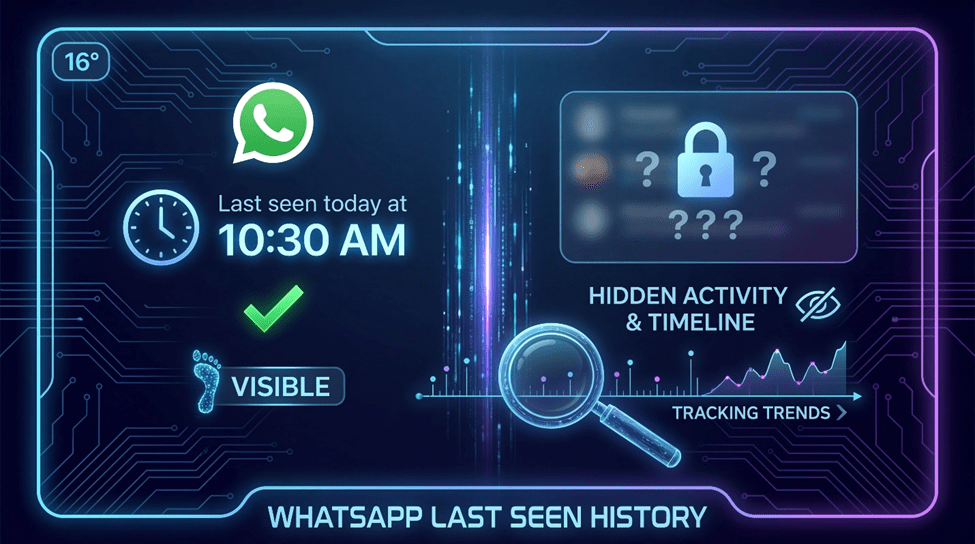
WhatsApp has become one of the most widely used communication platforms in the world, and with that popularity comes a growing curiosity about user activity indicators-especially WhatsApp last seen history.
For millions of users, the small timestamp displayed under a contact’s name often feels more meaningful than it actually is. People interpret it as a signal of availability, responsiveness, or even intent, without fully understanding how the system works or what information it truly provides.
Unlike message read receipts or delivery ticks, WhatsApp last seen is not designed to tell a complete story. It shows only the most recent moment a user was connected to the app, not a detailed activity timeline.
However, users frequently attempt to infer patterns, habits, or changes in behavior based on these timestamps, which has led to widespread confusion, myths, and misunderstandings about what last seen history actually represents.
This article explores WhatsApp last seen history in depth-what it shows, what it deliberately hides, and why users are increasingly interested in tracking it over time. We will break down how the system records activity, how privacy settings affect visibility, and how users can interpret this information responsibly.
By the end, you will have a clear, factual understanding of WhatsApp last seen history and how it fits into modern digital communication behavior
WhatsApp Last Seen History: How the Feature Actually Works
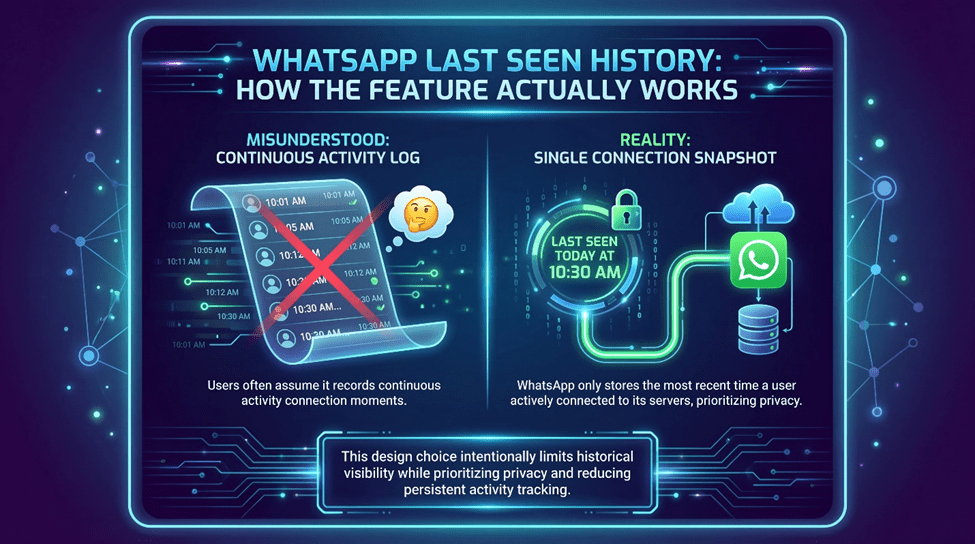
WhatsApp last seen history is often misunderstood because users assume it records continuous activity rather than a single connection moment. In reality, WhatsApp only stores the most recent time a user actively connected to its servers.
This design choice intentionally limits historical visibility while prioritizing privacy and reducing persistent activity tracking.
How WhatsApp Records Last Seen Data
WhatsApp updates the last seen timestamp only when a user opens the application while connected to the internet. It does not refresh during background processes, message notifications, or passive data synchronization events. As a result, last seen history never reflects total screen time or message reading behavior.
Once updated, the previous timestamp is overwritten rather than stored as a visible log or timeline. This means WhatsApp itself does not provide users with access to historical last seen records. Any perception of “history” is therefore based on observation, not built-in chronological data retention.
Why WhatsApp Limits Last Seen History Visibility
WhatsApp deliberately restricts last seen history to prevent invasive monitoring and reduce social pressure among users. Continuous visibility could enable behavioral surveillance, relationship conflicts, or unhealthy communication expectations.
Limiting historical access helps maintain balance between presence awareness and personal privacy.
Privacy settings further control last seen visibility by allowing users to hide timestamps from everyone, contacts only, or specific individuals. These controls affect both real-time visibility and any attempt to infer past activity.
As a result, last seen history remains fragmented and intentionally incomplete.
Why Users Still Try to Interpret Activity Patterns
Despite these limitations, users continue attempting to understand behavior through repeated observation of last seen timestamps. Changes in timing, frequency, or visibility often lead users to infer routines, availability, or responsiveness patterns.
This curiosity explains the growing interest in tools that organize observations without violating platform restrictions.
Understanding how WhatsApp last seen history actually works helps users interpret these signals more realistically. It also explains why external solutions focus on notifications and change tracking rather than accessing nonexistent internal history.
WhatsApp Last Seen History: What It Shows Versus What It Hides
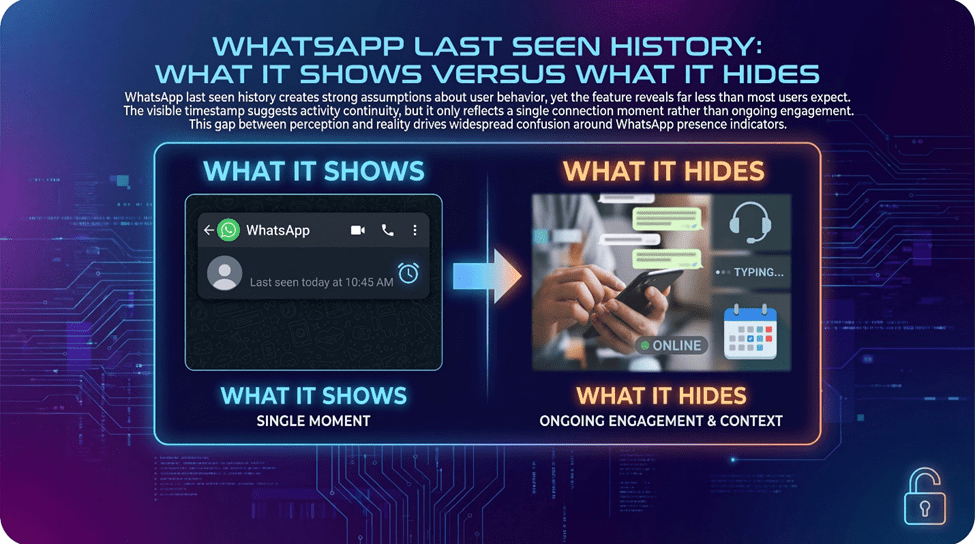
WhatsApp last seen history creates strong assumptions about user behavior, yet the feature reveals far less than most users expect. The visible timestamp suggests activity continuity, but it only reflects a single connection moment rather than ongoing engagement.
This gap between perception and reality drives widespread confusion around WhatsApp presence indicators.
What WhatsApp Last Seen History Actually Shows
WhatsApp last seen history only displays the most recent time a user opened the application while connected to the internet. It does not show how long the app was used, what actions were taken, or whether messages were read. This limited data snapshot often gets overinterpreted by users.
The timestamp updates only when WhatsApp becomes active in the foreground, not during background notifications or passive syncing. As a result, a user may appear inactive despite actively responding through notifications.
This technical behavior explains many mismatches between perceived and actual availability.
What WhatsApp Last Seen History Intentionally Hides
WhatsApp does not store or display a chronological record of previous last seen timestamps. Once updated, older values are permanently replaced, eliminating any built-in history view. This design prevents users from tracking daily routines, sleep cycles, or communication habits directly within the app.
The platform also hides last seen information when privacy settings restrict visibility. If a user limits access, observers cannot confirm whether timestamps changed or remained static. This selective opacity is intentional and aligns with WhatsApp’s privacy-first communication model.
Why Users Misinterpret Last Seen Visibility
Users often assume last seen history reflects deliberate behavior, such as ignoring messages or avoiding conversations. In reality, technical factors like background usage, connectivity issues, or app restrictions frequently influence timestamp accuracy. These misinterpretations can create unnecessary emotional or social tension.
Because WhatsApp does not explain these mechanics clearly, users rely on assumptions rather than system logic. This lack of transparency fuels curiosity around alternative ways to understand activity without breaching privacy boundaries.
Why Understanding These Limits Matters
Recognizing what WhatsApp last seen history shows and hides helps users avoid incorrect conclusions about others’ behavior. It also highlights why the platform avoids offering historical visibility directly.
Understanding these limits encourages healthier communication expectations and more informed interpretations of online presence.
H2: WhatsApp Last Seen History: Why Users Want to Track It Over Time
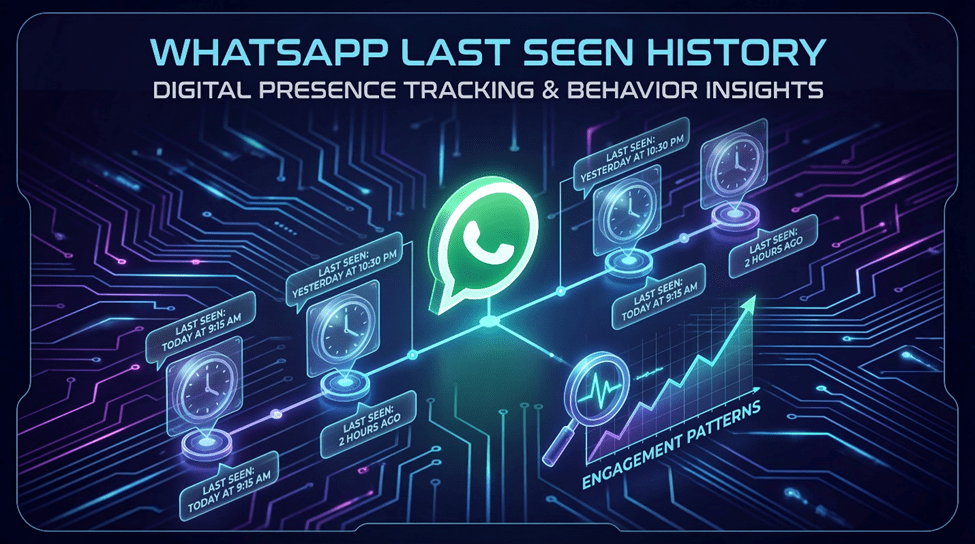
Interest in WhatsApp last seen history continues to grow because users rely heavily on digital presence signals to interpret communication behavior. In modern messaging culture, availability indicators often influence expectations, response timing, and perceived engagement.
As a result, users naturally seek ways to observe patterns rather than isolated timestamps.
Communication Expectations in Always-Online Messaging
WhatsApp has normalized instant communication, making users more sensitive to signs of activity or inactivity. When messages go unanswered, users often check last seen history to determine whether someone was recently online. This behavior reflects a desire for clarity rather than surveillance.
Repeated exposure to timestamps encourages pattern recognition. Users subconsciously compare times across days, forming assumptions about routines or availability windows. Even without formal history access, human behavior drives users to mentally reconstruct timelines based on observation.
Personal, Professional, and Relationship Use Cases
Different motivations drive interest in WhatsApp last seen history depending on context. Professionals may want to understand response habits across time zones, while families use it to coordinate availability.
In relationships, users often seek reassurance, consistency, or clarity regarding communication gaps.
These varied use cases explain why interest in tracking tools spans casual users, remote workers, and long-distance connections. The goal is rarely intrusion; instead, it is about reducing uncertainty in digital interactions where tone and intent are otherwise unclear.
Limitations of Manual Observation
Manually tracking WhatsApp last seen history is unreliable and time-consuming. Timestamps change unpredictably, visibility may disappear due to privacy settings, and users cannot monitor activity continuously. This leads to missed updates and inaccurate assumptions.
Because WhatsApp does not store historical data, users depend on memory or repeated checking, which increases cognitive effort. These limitations create demand for structured ways to observe changes without constant manual monitoring.
How Activity Awareness Tools Fit This Gap
To address these challenges, some users turn to activity awareness tools designed to notify changes rather than expose hidden data. Solutions like LastSeen Notify focus on alert-based tracking, informing users when status changes occur without accessing private message content.
This approach aligns with user intent by organizing observable signals responsibly. Instead of creating invasive histories, it helps users stay informed while respecting WhatsApp’s technical and privacy boundaries.
H2: WhatsApp Last Seen History: Privacy Settings and Their Real Impact

WhatsApp last seen history is heavily shaped by privacy controls, yet many users misunderstand how these settings affect visibility. While users often believe privacy options simply hide timestamps, they actually alter how activity signals are shared and interpreted.
Understanding these controls is essential for realistic expectations around last seen behavior.
How WhatsApp Last Seen Privacy Settings Work
WhatsApp allows users to choose who can see their last seen status: everyone, contacts only, or nobody. These settings apply universally and immediately affect visibility across all conversations. When restricted, observers lose access to both real-time timestamps and any opportunity to infer historical activity.
Importantly, WhatsApp enforces reciprocity. If a user hides their last seen, they also cannot view others’ last seen information. This design prevents one-sided monitoring and reinforces fairness within the platform’s privacy framework.
Why Last Seen History Disappears Suddenly
Users often assume someone intentionally hides activity when last seen information disappears. In reality, privacy changes are frequently automatic or situational. Users may temporarily adjust settings, enable privacy presets, or experience visibility changes after updates or device migrations.
Because WhatsApp does not notify contacts when privacy settings change, observers interpret disappearance as behavioral intent. This misunderstanding contributes to confusion around last seen history and reinforces incorrect assumptions about user availability.
The Difference Between Online Status and Last Seen History
Online status and last seen history are governed by separate mechanisms. Online status appears only while a user actively uses the app, whereas last seen reflects the most recent active connection. Privacy settings may hide last seen while still allowing brief online visibility.
This distinction explains why users sometimes see someone online despite hidden last seen history. Understanding this difference helps users avoid misinterpreting short online appearances as deliberate communication signals.
Why Privacy Limits Drive Demand for Alerts
When privacy settings restrict continuous visibility, users seek alternative ways to stay informed without constant checking. Alert-based monitoring respects these limits by notifying observable changes rather than exposing hidden data.
Tools like LastSeen Notify operate within this boundary by tracking visible status transitions only. This approach supports awareness while aligning with WhatsApp’s privacy design and user control principles.
H2: How Users Can Responsibly Track WhatsApp Last Seen History
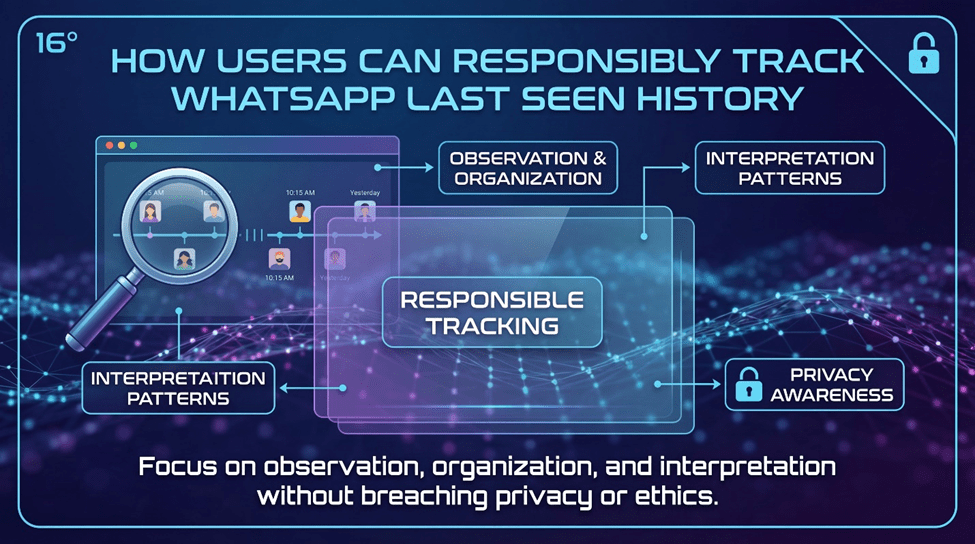
Tracking WhatsApp last seen history can provide useful insights, but it must be approached responsibly to avoid privacy violations or unnecessary stress. Users who attempt to monitor patterns without understanding system limitations often form incorrect assumptions, creating tension or miscommunication.
Responsible tracking focuses on observation, organization, and interpretation without breaching WhatsApp’s design or ethics.
Pattern Observation Versus Constant Manual Checking
Manually checking last seen timestamps repeatedly can become compulsive, increasing anxiety and misjudgments. Observing patterns at intervals rather than obsessively checking ensures healthier engagement. Recognizing trends over time offers more accurate insights than isolated observations.
Using Historical Context Instead of Single Timestamps
Focusing on long-term patterns allows users to understand typical availability rather than reacting to single moments. This approach reduces emotional reactions to perceived inactivity and creates realistic expectations about response times. Structured observation turns raw timestamps into meaningful context.
How Tools Like LastSeen Notify Structure History
Tools such as LastSeen Notify help users track observable changes without accessing private data. They provide organized timelines and optional notifications when a contact’s status changes. This functionality enables users to stay informed while respecting privacy, eliminating the need for constant manual checks.
Avoiding Emotional Misuse of Activity Data
Understanding that last seen timestamps reflect connectivity, not intent, is crucial. Users should avoid interpreting these signals as personal judgments or indicators of engagement. Responsible tracking emphasizes factual awareness, not emotional assumptions.
Benefits of Responsible Tracking
Structured and ethical observation improves communication efficiency, supports time management, and reduces stress. By respecting privacy boundaries while using available tools, users can make informed decisions about when to send messages and how to interpret patterns in WhatsApp activity.
H2: Common Myths About WhatsApp Last Seen History

Tracking WhatsApp last seen history can provide useful insights, but it must be approached responsibly to avoid privacy violations or unnecessary stress. Users who attempt to monitor patterns without understanding system limitations often form incorrect assumptions, creating tension or miscommunication.
Responsible tracking focuses on observation, organization, and interpretation without breaching WhatsApp’s design or ethics.
Pattern Observation Versus Constant Manual Checking
Manually checking last seen timestamps repeatedly can become compulsive, increasing anxiety and misjudgments. Observing patterns at intervals rather than obsessively checking ensures healthier engagement. Recognizing trends over time offers more accurate insights than isolated observations.
Using Historical Context Instead of Single Timestamps
Focusing on long-term patterns allows users to understand typical availability rather than reacting to single moments. This approach reduces emotional reactions to perceived inactivity and creates realistic expectations about response times. Structured observation turns raw timestamps into meaningful context.
How Tools Like LastSeen Notify Structure History
Tools such as LastSeen Notify help users track observable changes without accessing private data. They provide organized timelines and optional notifications when a contact’s status changes.
This functionality enables users to stay informed while respecting privacy, eliminating the need for constant manual checks.
Avoiding Emotional Misuse of Activity Data
Understanding that last seen timestamps reflect connectivity, not intent, is crucial. Users should avoid interpreting these signals as personal judgments or indicators of engagement. Responsible tracking emphasizes factual awareness, not emotional assumptions.
Benefits of Responsible Tracking
Structured and ethical observation improves communication efficiency, supports time management, and reduces stress. By respecting privacy boundaries while using available tools, users can make informed decisions about when to send messages and how to interpret patterns in WhatsApp activity.
H2: Common Myths About WhatsApp Last Seen History

Understanding WhatsApp last seen history can enhance communication efficiency and help users interact more thoughtfully. By recognizing patterns, timing, and visibility limitations, individuals can manage expectations, reduce misunderstandings, and foster healthier messaging habits.
Improving Message Timing Without Pressure
Observing habitual last seen patterns allows users to send messages when contacts are more likely to respond. This minimizes the stress of delayed replies and prevents misinterpretation of short-term inactivity. Structured awareness encourages considerate communication rather than impulsive checking.
Reducing Misunderstandings in Daily Communication
Many conflicts arise from assuming intent based on last seen timestamps. Recognizing that these indicators reflect connectivity rather than attention prevents unnecessary assumptions. Using historical patterns and optional notifications helps maintain clarity and reduces emotional bias.
Supporting Respectful Digital Boundaries
Awareness of last seen history enables users to balance responsiveness with personal boundaries. Instead of constant monitoring, individuals can observe trends and plan interactions strategically. Respecting privacy while staying informed fosters trust and reduces pressure in both personal and professional contexts.
Practical Role of Tools Like LastSeen Notify
Tools such as LastSeen Notify transform observable activity into organized insights. Users receive alerts and structured timelines, allowing informed decisions without breaching privacy. This functionality supports effective communication, timely engagement, and responsible tracking practices.
H2: Conclusion

WhatsApp last seen history provides limited but useful information about user activity, yet it is often misunderstood. The timestamps reflect the last moment a user was active on the app, not their intent, attention, or overall engagement.
Misinterpreting this data can lead to unnecessary stress, false assumptions, and communication misunderstandings.
Understanding the distinction between last seen history and online status is essential for responsible observation. Privacy settings further influence visibility, creating intentional gaps that prevent continuous monitoring.
Recognizing these boundaries encourages realistic expectations and promotes respectful interaction.
Structured observation, when done ethically, can improve communication efficiency. Tools like LastSeen Notify help users track observable changes, organize patterns, and receive notifications without accessing private content.
This approach empowers individuals to manage message timing, interpret patterns accurately, and maintain healthy digital habits.
By combining technical awareness, privacy respect, and optional monitoring tools, users can leverage WhatsApp last seen history effectively. The result is more informed communication, reduced misunderstandings, and a balanced approach to digital presence in modern messaging culture.