News
WhatsApp Online: Understanding Presence, Tracking, and Responsible Visibility

WhatsApp online status has become one of the most widely observed indicators of digital presence in modern communication. Despite its simplicity, the system behaves in ways that many users misunderstand, causing unnecessary assumptions, misinterpretations, and curiosity about structured tracking solutions.
Understanding its mechanics helps users communicate more realistically.
Digital presence indicators influence personal relationships, remote work coordination, and daily social behavior. Users often assume that appearing online directly correlates with reading messages or willingness to respond, which is inaccurate.
This misunderstanding drives interest in patterns, historical activity, and optional alert systems for improved awareness.
This article explores WhatsApp online status from a technical, behavioral, and ethical perspective. It examines how online signals operate, how last seen differs, why users monitor activity, what privacy boundaries exist, and how responsibly structured tools like LastSeen Notify organize visible information.
The content remains educational, accurate, and aligned with user needs without aggressive promotion or violation of ethical boundaries.
WhatsApp Online Status: How the System Detects Presence
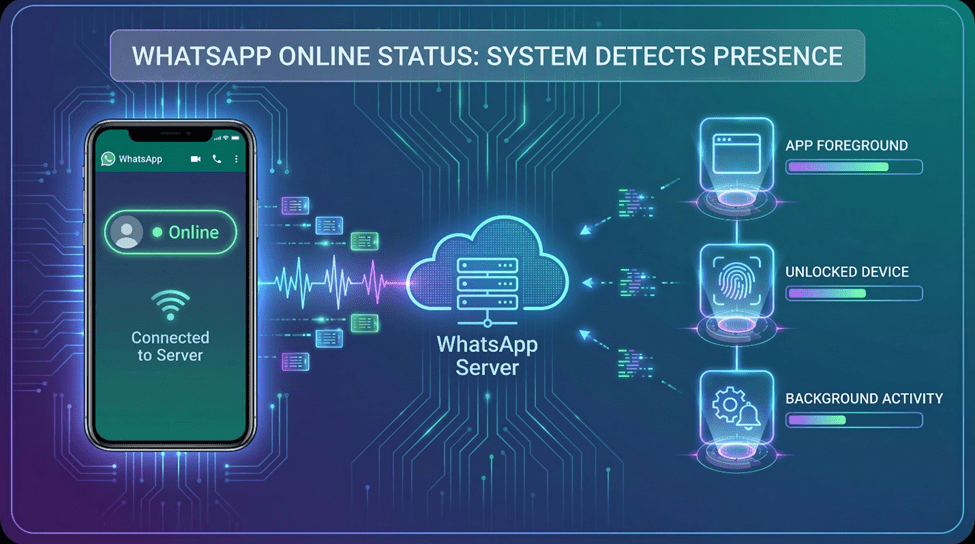
WhatsApp online status signals that a user device is actively connected to WhatsApp servers. This does not guarantee engagement with messages or reading content; it simply reflects session connectivity.
Misinterpreting this signal often leads to assumptions about attentiveness or intent, which are technically inaccurate.
The platform uses dynamic server pings to detect active sessions. These pings occur whenever the app is foregrounded, unlocked, or briefly background-connected.
Even minimal interactions, such as checking notifications or opening media, may trigger temporary WhatsApp online indicators, creating brief online appearances.
Server Communication and Online Detection
WhatsApp communicates through encrypted connections to maintain session continuity. Each ping confirms that the device is reachable, but the system does not track behavior inside the app.
This distinction ensures that WhatsApp online status reflects connectivity, not engagement. Users may appear online without responding or even viewing incoming messages, making the signal misleading when interpreted emotionally.
Common Misconceptions About WhatsApp Online Status
Many users equate WhatsApp online presence with conversational intent. They assume that if a contact appears online, they are actively reading messages or available to reply immediately.
This misunderstanding often creates unnecessary anxiety or expectation, especially in personal and professional interactions. Awareness of technical limitations reduces misinterpretation and promotes rational communication habits.
Practical Implications of System Design
Understanding system mechanics clarifies why brief WhatsApp online appearances occur. A person may appear online multiple times without sending messages, due to background updates or app refreshes.
Recognizing this behavior helps users differentiate between technical presence and meaningful activity, which is essential for responsible observation and communication.
WhatsApp Online vs Last Seen: Key Differences Explained
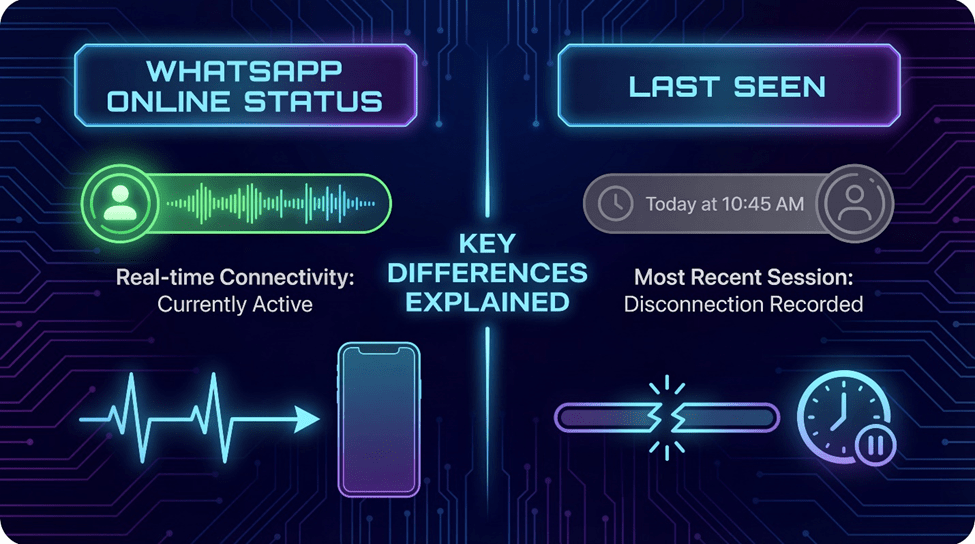
WhatsApp maintains two distinct presence signals: online status and last seen. Online status reflects real-time connectivity, while last seen records the most recent session disconnection.
Many users confuse the two, misinterpreting online appearances as last seen updates or assuming continuous activity.
Last seen is stored as a timestamp visible according to privacy settings. Online status is transient and updates dynamically, disappearing when the connection ends. Understanding these distinctions reduces emotional misinterpretation and sets realistic communication expectations.
Understanding Last Seen Timestamps
Last seen timestamps indicate when the app last disconnected from servers. They do not reflect when a user stopped reading messages or using their device entirely.
Network interruptions, battery management, and background app behavior can further delay updates, creating apparent inconsistencies.
How Users Misinterpret Presence Signals
Users often expect a logical relationship between online status and last seen, assuming continuous presence. In reality, the signals operate independently. A user may appear online without updating last seen or have last seen updated without a visible online session. Misinterpretation fuels curiosity about monitoring tools.
Impacts on Communication Patterns
Incorrect assumptions about presence influence expectations and behavior. People may wait for responses, repeatedly check messages, or infer intent inaccurately.
Recognizing that online status is purely connectivity-based helps users maintain balanced communication and manage digital interaction stress effectively.
Why Users Track WhatsApp Online Activity

Many individuals seek to track WhatsApp online behavior over time to identify communication patterns and availability windows.
The motivation is typically practical: improving timing, reducing miscommunication, and understanding recurring patterns rather than monitoring specific moments.
Pattern-based tracking helps avoid emotional bias. Instead of obsessively checking chats, users analyze historical trends to predict availability. Awareness of usage cycles enables informed decisions for professional coordination, long-distance communication, or personal interaction timing.
Understanding Online Patterns
Regular online patterns often emerge from daily routines rather than conscious activity choices. Recognizing these patterns allows users to align communication attempts with likely response windows, improving efficiency and reducing unnecessary frustration.
Benefits of Historical Monitoring
Historical monitoring offers insight into activity trends that single-time observations cannot. This approach clarifies habits, schedules, and realistic response expectations. It replaces guesswork with factual observations, promoting rational digital behavior.
Structured Tools for Monitoring
Tools like LastSeen Notify organize online status into readable timelines and optional alerts. Rather than encouraging invasive monitoring, these systems provide structured visibility, allowing users to make informed communication decisions while respecting boundaries.
WhatsApp Online Alerts: Practical Uses
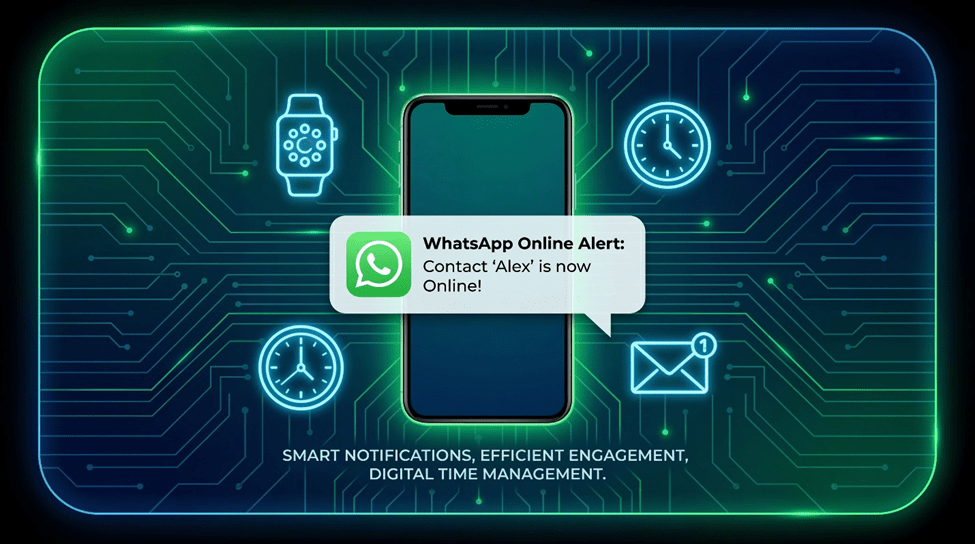
Notification alerts are useful for users unable to continuously monitor chats. WhatsApp online alerts inform individuals when specific contacts are active, allowing timely engagement without constant app checking.
Alerts improve efficiency, reduce repetitive checking, and help manage digital time more responsibly.
Coordinating Across Time Zones
Online notifications benefit users managing cross-time-zone communication. They allow sending messages at optimal times, improving response likelihood. Understanding presence windows reduces frustration from delayed replies while maintaining professional or social etiquette.
Minimizing Compulsive Checking
Alerts reduce compulsive refreshing behavior, replacing repeated manual observation with structured updates. Users stay informed only when meaningful activity occurs, preventing unnecessary anxiety or time waste.
How LastSeen Notify Implements Alerts
LastSeen Notify structures observable signals into optional alerts, organizing data into chronological histories. The tool preserves ethical boundaries by only using publicly visible signals and giving users control over notification preferences.
WhatsApp Privacy Settings and Online Visibility
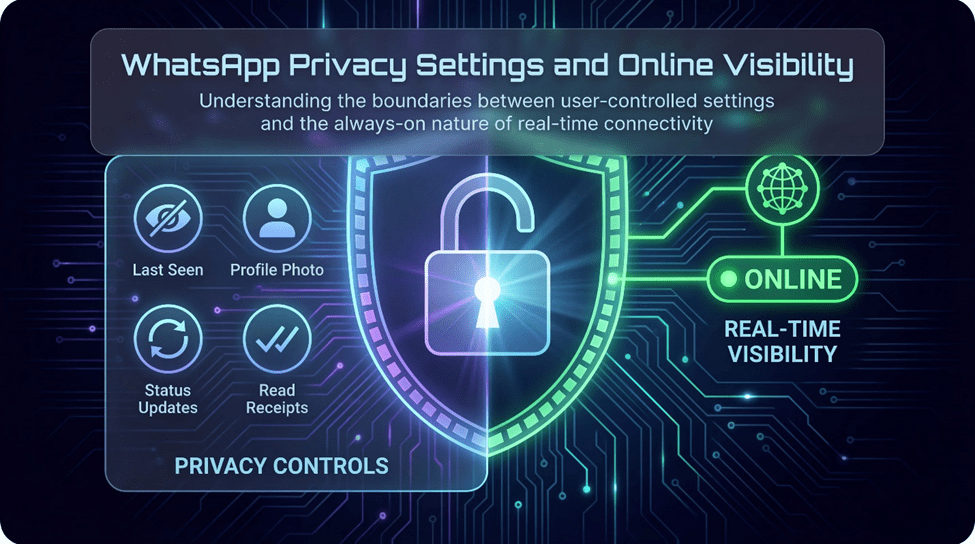
WhatsApp privacy settings allow users to control who can see their last seen, profile photo, status updates, and read receipts. However, online status visibility remains partially exposed while the application is active.
Understanding these boundaries helps users manage expectations and maintain realistic digital behavior.
Privacy settings create layers of control but cannot fully obscure real-time connectivity. Users can restrict last seen visibility to specific contacts or nobody, yet online presence appears whenever the app is connected.
Awareness of these mechanics prevents misinterpretation and promotes responsible communication habits.
What Can Be Hidden
Last seen timestamps can be hidden from all contacts or selectively shown, providing partial visibility. Profile photos and status updates may also be restricted.
These measures enhance privacy but do not affect real-time online detection, which is connection-based rather than metadata-based.
Why Online Status Cannot Be Fully Hidden
Online status relies on server connectivity for message delivery reliability. Whenever the app establishes a session, WhatsApp communicates the device presence automatically.
Even with restrictive privacy settings, users remain partially visible during active usage, which clarifies misconceptions about invisibility.
Managing Expectations Around Privacy
Understanding privacy limitations allows users to interpret signals responsibly. It prevents frustration arising from assumptions about someone’s activity or responsiveness.
Combining technical awareness with privacy settings ensures balanced, informed digital communication and reduces unnecessary anxiety.
Ethical Use of WhatsApp Online Tracking Tools
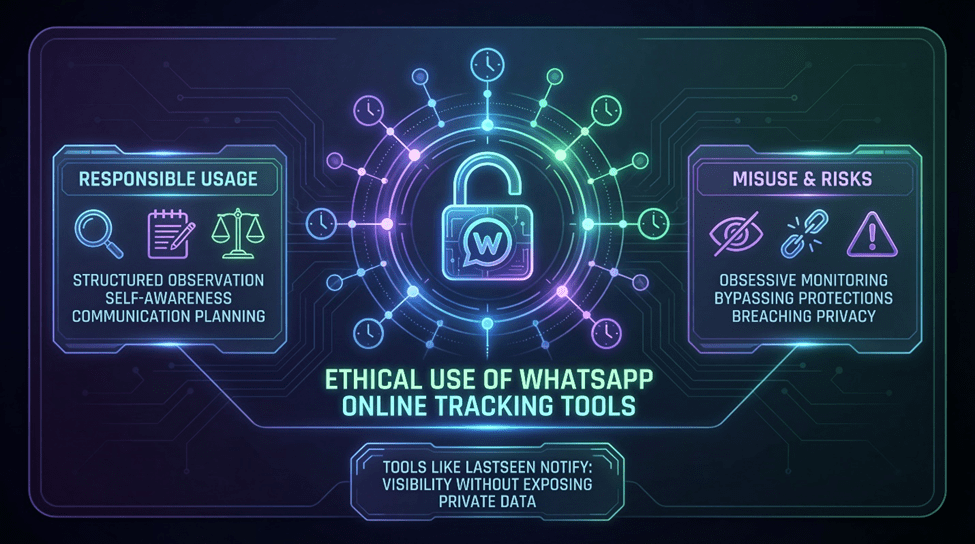
Tracking tools should focus on structured observation rather than invasive monitoring. Responsible usage emphasizes self-awareness, communication planning, and understanding patterns without breaching privacy.
Misuse occurs when monitoring becomes obsessive or attempts to bypass WhatsApp protections.
Ethical frameworks guide users to respect boundaries while gaining insight into patterns. Awareness and historical tracking are legitimate when they support personal or professional communication efficiency.
Tools like LastSeen Notify provide visibility without exposing private data, aligning functionality with responsible practices.
Defining Ethical Boundaries
Ethical tracking uses publicly available signals only, avoiding hidden message access or unauthorized surveillance. Users should only observe patterns relevant to communication planning rather than personal curiosity, ensuring compliance with privacy expectations and social norms.
How Tools Can Support Responsible Observation
Structured tools organize online presence data into readable summaries and optional notifications. They convert raw signals into meaningful trends, allowing users to manage timing and expectations without creating pressure or misinterpretation.
Avoiding Emotional Misuse
Responsible tracking avoids forming assumptions about intent or emotional state. Online visibility signals are purely technical, and treating them as personal judgments can create unnecessary stress. Structured monitoring supports factual interpretation and reduces emotional bias.
Understanding WhatsApp Online Signals Without Misinterpretation
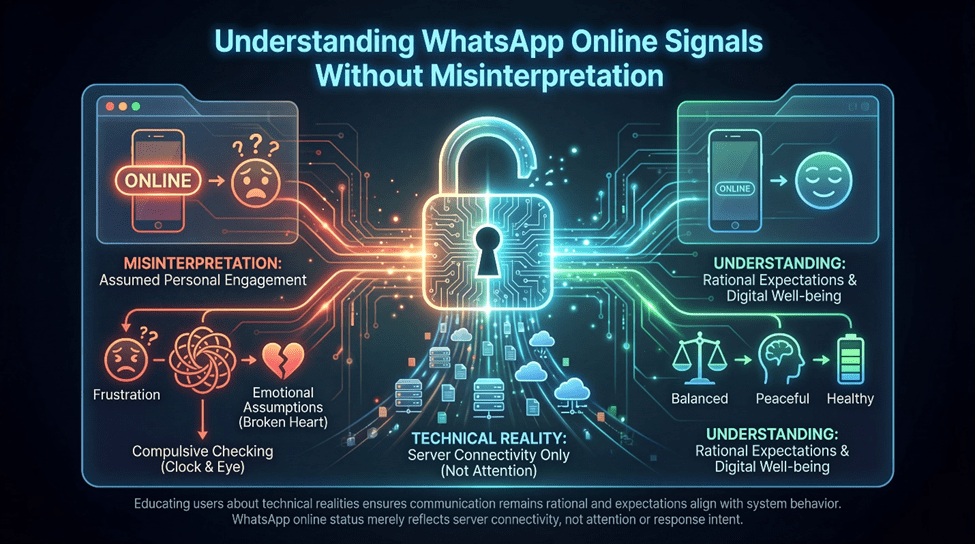
Users often misread online signals as personal engagement indicators. This misunderstanding leads to frustration, repeated checking, and emotional assumptions. Educating users about technical realities ensures communication remains rational and expectations align with system behavior.
WhatsApp online status merely reflects server connectivity, not attention or response intent. Recognizing this distinction encourages responsible observation and reduces compulsive checking behaviors, improving digital well-being.
Reframing Expectations
Viewing online status as a neutral technical signal allows users to interpret presence accurately. It shifts focus from emotional speculation to rational planning, supporting balanced communication habits.
Combining Awareness and Responsible Tracking
Understanding patterns, using optional alerts, and reviewing historical presence creates a structured approach. Tools like LastSeen Notify help users gain insight while maintaining respect for privacy and digital boundaries.
WhatsApp Last Seen History: How Patterns Inform Communication
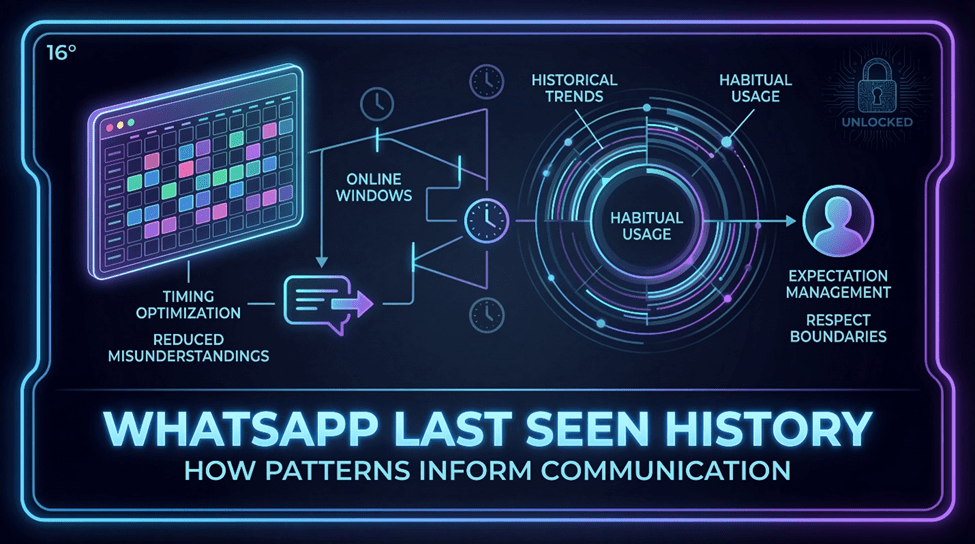
Historical observation of WhatsApp last seen provides context beyond individual sessions. Analyzing recurring online windows helps users understand typical availability, supporting better message timing and reduced misunderstandings.
Observing trends rather than isolated moments prevents overinterpretation. Users gain insight into contact habits, balancing expectation management with respect for personal boundaries. Historical trends contextualize presence, clarifying response patterns and habitual usage.
Benefits of Historical Analysis
Tracking long-term trends highlights regular communication intervals and identifies periods of inactivity. This information enables rational planning of conversations without imposing pressure or relying on assumptions.
Limitations of Last Seen History
Last seen history does not reflect actual message engagement or emotional intent. Users must interpret trends carefully, combining this data with contextual understanding to avoid misjudgments.
Integrating Alerts With Historical Patterns
Tools like LastSeen Notify combine optional alerts with historical tracking. Users can receive notifications while observing trends over days or weeks. This integration allows informed decisions about communication timing, avoiding constant manual monitoring.
Practical Applications of WhatsApp Online Tracking
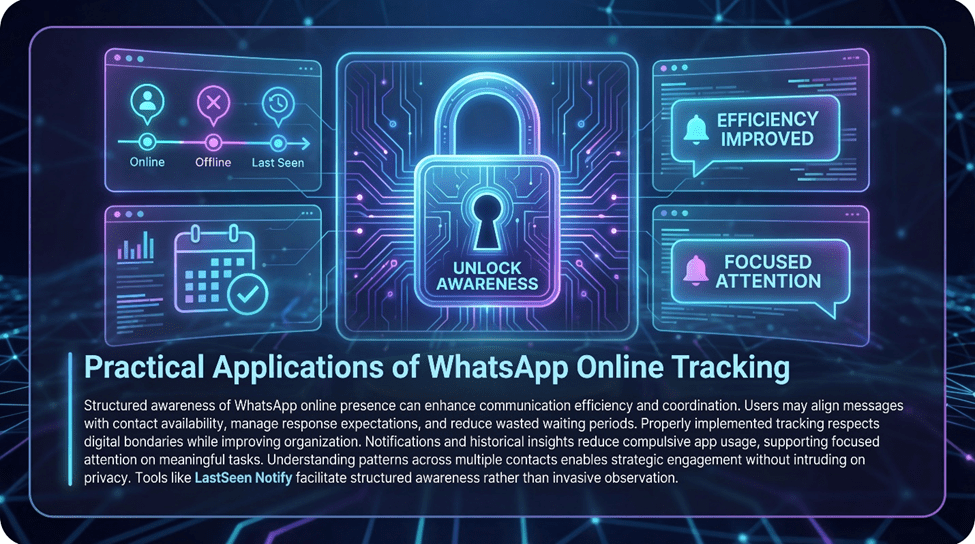
Structured awareness of WhatsApp online presence can enhance communication efficiency and coordination. Users may align messages with contact availability, manage response expectations, and reduce wasted waiting periods.
Properly implemented tracking respects digital boundaries while improving organization.
Notifications and historical insights reduce compulsive app usage, supporting focused attention on meaningful tasks. Understanding patterns across multiple contacts enables strategic engagement without intruding on privacy.
Tools like LastSeen Notify facilitate structured awareness rather than invasive observation.
Coordinating Professional Communication
Knowing when colleagues or clients are typically active allows scheduling messages efficiently. It reduces frustration from delayed replies and improves responsiveness without over-monitoring.
Enhancing Personal Communication
Observing online trends for friends or family supports balanced interaction. Users can plan conversation times based on habitual online windows, minimizing misunderstandings or misinterpretations.
Supporting Healthy Digital Habits
Combining alerts with historical data encourages periodic observation rather than constant checking. Users gain clarity while maintaining boundaries, reducing stress and improving overall digital well-being.
Conclusion
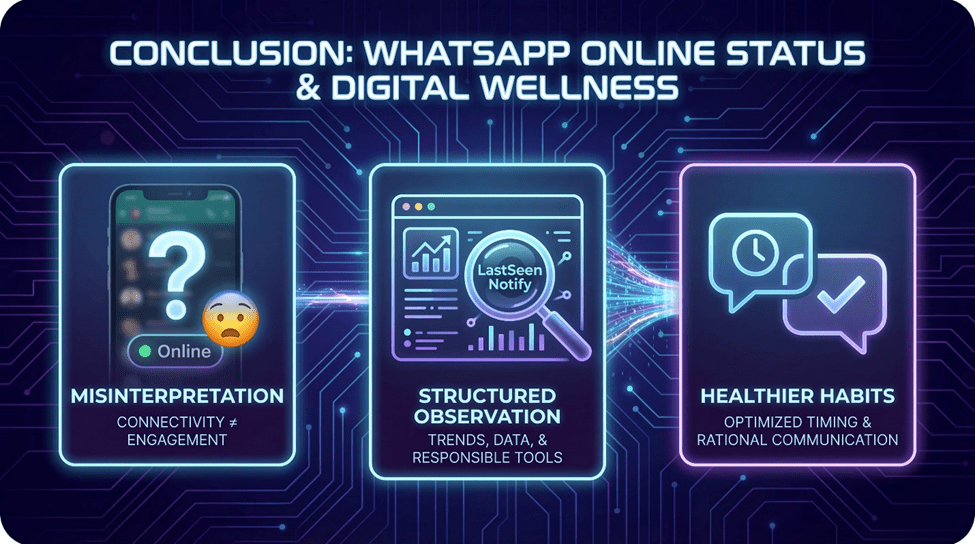
WhatsApp online status represents connectivity, not engagement, intent, or emotional availability. Misinterpretation creates unnecessary tension and false expectations. In view of all these, our team at Goooch have come up with the full dedication to design this LastSeen Notify.
Recognizing the technical nature of online presence promotes rational communication and balanced digital behavior.
Structured observation using trends, historical data, and optional alerts replaces compulsive checking. Tools like LastSeen Notify organize public signals responsibly, supporting informed decisions while respecting privacy boundaries.
By understanding system behavior, users can optimize message timing, interpret presence accurately, and maintain healthier communication habits.