News
GPS Location on iPhone: How Tracking Works and How to Change It Safely
GPS Location on iPhone is a core part of how modern iPhones interact with apps, services, and digital platforms. From navigation and weather updates to social media check-ins and mobile games, location data influences daily smartphone use more than most users realize. As location-based services continue to expand, understanding how GPS tracking works has become increasingly important.
At the same time, many users are becoming more conscious of how their GPS location is collected and used. Some apps continuously track movement in the background, while others restrict features based on geographic regions. These limitations often push users to look for ways to manage or adjust their location settings safely.
Changing GPS Location on iPhone is no longer limited to technical experts. Today, iPhone users explore location control for privacy protection, app testing, gaming, and travel-related needs. However, not all methods are safe, and incorrect approaches can trigger app restrictions or security risks.
This blog explains GPS Location on iPhone in clear and practical terms. It covers how location tracking works on iPhone, why users want more control, and which methods allow location changes without compromising device safety. The goal is to help users make informed decisions while maintaining full control over their digital presence.
GPS Location on iPhone Explained in Simple Terms
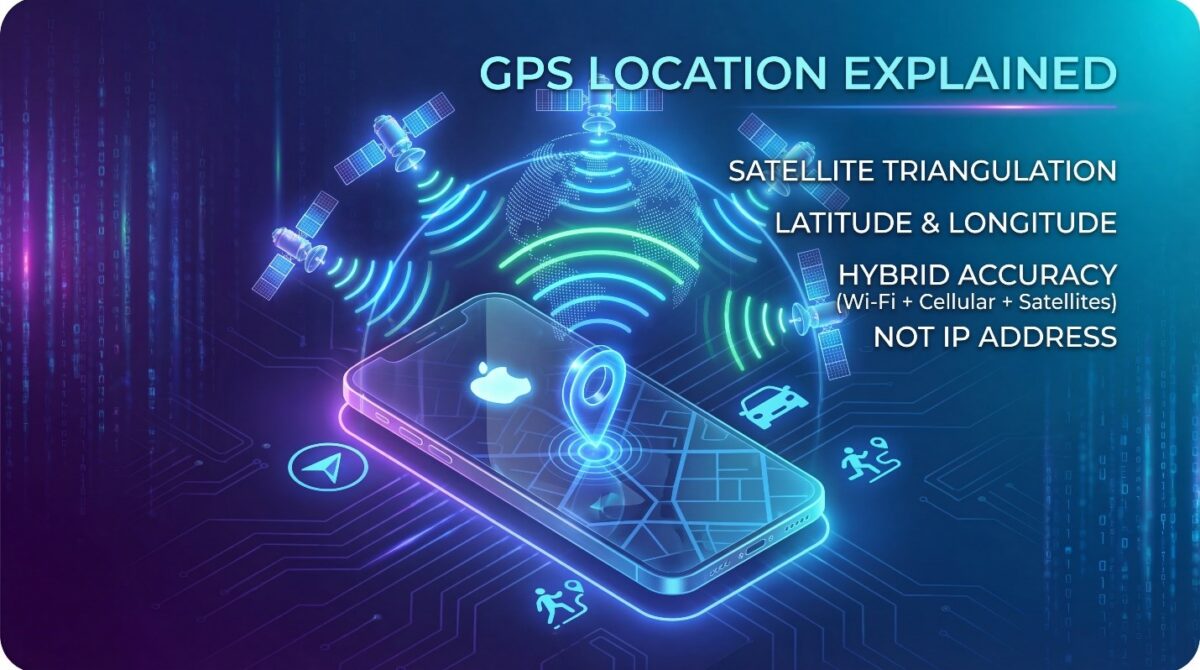
Satellites receive signals from devices and using which it calculates the geographic position of the devices. . GPS Location on iPhone works by communicating with multiple GPS satellites orbiting the Earth. These satellites transmit signals that help the device determine its exact position based on distance and timing data.
Unlike basic location methods, GPS does not rely on mobile networks alone. It uses satellite triangulation to calculate latitude, longitude, and movement speed. This is why GPS location remains accurate even when cellular coverage is weak. However, accuracy can vary depending on surroundings, signal strength, and environmental conditions.
In everyday use, GPS location operates quietly in the background. Navigation apps use it to provide turn-by-turn directions. Ride-sharing platforms rely on it for pickup accuracy. Games and fitness apps track movement using continuous GPS updates. Most users interact with GPS daily without actively noticing it.
GPS Location on iPhone works alongside Wi-Fi and cellular data to improve precision. When indoors, the system may rely more on nearby networks. Outdoors, satellites provide the most accurate positioning. This hybrid approach ensures smoother location tracking across different environments.
It is important to understand that GPS location represents a physical position, not an internet address. Many users confuse GPS with IP-based location. While IP addresses change through networks, GPS coordinates reflect real-world movement. This distinction becomes critical when users attempt to change or manage location data.
By understanding how GPS Location on iPhone functions at a basic level, users can make better decisions about privacy, app permissions, and location control tools. Knowledge removes confusion and helps prevent unsafe or ineffective methods of altering location behavior.
How Your iPhone Determines GPS Location
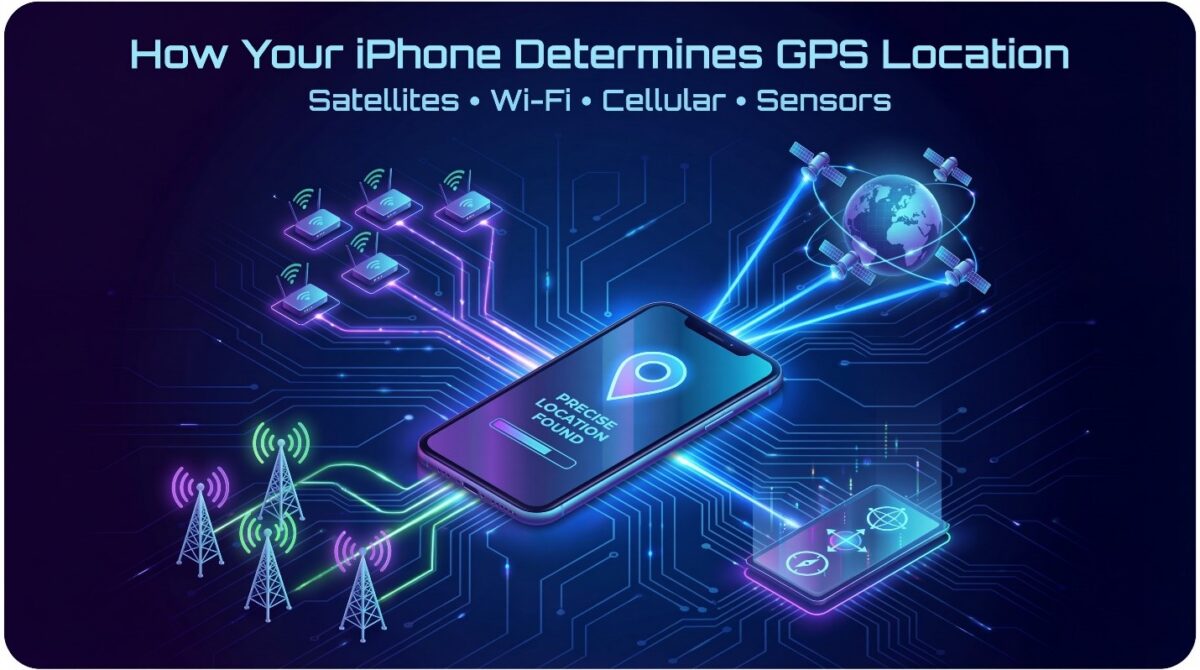
GPS Location on iPhone combines multiple technologies to determine your precise location. It does not rely on satellites alone. The device uses a combination of GPS signals, Wi-Fi networks, cellular towers, and built-in sensors. Together, these systems create an accurate representation of your position in real time.
This hybrid system ensures that location tracking works even in challenging environments. Outdoors, satellites provide high precision. Indoors or in areas with weak GPS signals, Wi-Fi and cellular data help maintain accuracy. Understanding how the iPhone calculates location is crucial before attempting any GPS location changes.
Tracking GPS Location on iPhone also continuously monitors movement patterns. This allows apps to provide turn-by-turn directions, track steps, and measure distances. Each app accesses location data differently depending on its permissions, which is why some apps appear more precise than others.
Satellites, Sensors, and Signal Processing
The GPS chip in your iPhone receives signals from multiple satellites. These signals contain timestamps that the device uses to calculate distance. By analyzing signals from several satellites simultaneously, the iPhone pinpoints latitude, longitude, and altitude accurately.
Built-in sensors like accelerometers and gyroscopes complement satellite data. They estimate movement speed and direction, improving tracking when signals are temporarily weak or blocked.
Why Location Accuracy Changes Indoors
GPS signals are often blocked by buildings, dense structures, or underground areas. In such cases, iPhones rely on Wi-Fi networks and nearby cellular towers for location updates.
This hybrid method maintains usability but may reduce accuracy slightly. Apps may show delayed or approximate positioning indoors. Understanding this helps explain why location behavior can change in different environments.
Where GPS Location Data Is Actually Used

GPS Location on iPhone plays a key role across many apps and services. It is not limited to navigation; its influence is widespread. Understanding where this data is used helps users see why location control matters.
Navigation and Maps
Navigation apps like Apple Maps and Google Maps rely on GPS to provide turn-by-turn directions. Real-time traffic updates, estimated arrival times, and rerouting are all based on your device’s current location. Without GPS, these features would be ineffective.
Social Media and Check-ins
Social platforms often request GPS access for tagging locations in posts or photos. This enables features like location-based stories, nearby friend suggestions, and geotagged content. Users who value privacy may want to control or limit this access.
Gaming and Location-Based Apps
Games like Pokémon Go, AR apps, and geolocation-based challenges use GPS to create interactive experiences. Accurate GPS ensures the game responds correctly to movement. Players who cannot travel freely sometimes use GPS spoofing to participate.
Fitness and Health Tracking
Fitness apps track running, cycling, or walking routes using GPS data. They measure distance, speed, and elevation. Misleading GPS or interruptions in data can result in incorrect tracking metrics.
E-commerce and Local Services
Retail and delivery apps use GPS to suggest nearby stores, estimate delivery times, and personalize offers. Accurate location data improves user experience and efficiency.
In summary, GPS Location on iPhone is a backbone for apps ranging from navigation and social media to gaming and fitness. Understanding these applications highlights why some users explore safe methods to manage or change their GPS location.
Why Users Feel the Need to Control GPS Location
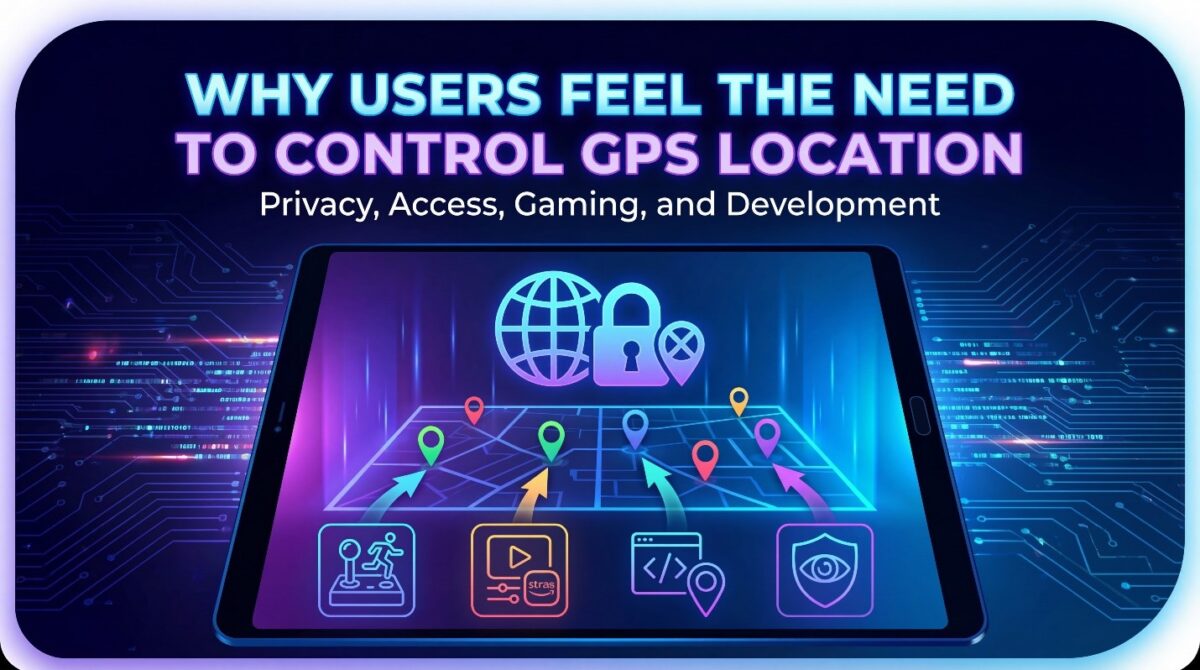
Many iPhone users are becoming more conscious about their digital footprint. GPS location tracking offers convenience, but it also exposes personal information to apps, advertisers, and sometimes third parties. Controlling GPS Location on iPhone allows users to maintain privacy and take charge of their data.
Some users want to explore apps that are restricted by region. For instance, certain streaming services, gaming features, or early app releases are limited to specific locations. Changing GPS Location on iPhone can unlock these opportunities without physically traveling.
Gaming is another major reason. Location-based games rely on movement to unlock features or access rare items. Users who cannot travel extensively may wish to simulate movement safely to enjoy the full experience.
Privacy concerns are equally significant. Constantly trackinging GPS Location on iPhone can reveal daily routines, frequently visited places, and even home addresses. Users who value security seek ways to manage GPS location while keeping apps functional.
In addition, app testing and development often require location changes. Developers need to simulate different environments to ensure apps respond accurately in multiple regions.
Overall, the desire to control GPS Location on iPhone stems from privacy, accessibility, entertainment, and professional needs. By understanding why users seek this control, it becomes easier to choose safe and effective methods for location management on iPhone.
Common Myths About Changing GPS Location on iPhone
Changing GPS location on iPhone is often misunderstood. Many users rely on outdated information or assumptions, which can lead to frustration or unsafe practices. Here are the most common myths debunked.
Myth 1 – VPNs Can Change GPS Location on iPhone
Many believe that using a VPN automatically changes the GPS location on iPhone. In reality, VPNs only mask your IP address. Apps that rely on GPS coordinates, like maps or games, will still detect your actual location. VPNs are useful for online privacy but do not affect iPhone GPS signals.
Myth 2 – You Need to Jailbreak to Spoof Location
Jailbreaking removes iOS protections, but it is not necessary for safe GPS location changes. Modern spoofing tools allow adjustments to GPS Location on iPhone without compromising system security. Jailbreaking increases risks, including app bans, malware, and voiding warranties.
Myth 3 – Free Spoofing Apps Are Always Safe
Many free GPS spoofing apps claim instant results. While tempting, they often use unreliable methods or inject inconsistent GPS signals. This can trigger detection by apps like Pokémon Go or cause iPhone system errors. Paid or well-maintained tools provide safer, stable solutions.
Myth 4 – GPS Location on iPhone Can Be Permanently Hidden
Some users think it’s possible to entirely hide GPS Location on iPhone. iPhone location services are integrated into core functionality. While permissions can be limited, the GPS system still functions. Complete invisibility is not possible without restricting all app access, which can break essential services.
By understanding these myths, users can approach GPS Location on iPhone control more intelligently. Safe methods rely on proper tools, realistic movement, and adherence to app rules. Knowledge prevents unnecessary risk and improves results.
How GPS Location Spoofing Works on iPhone
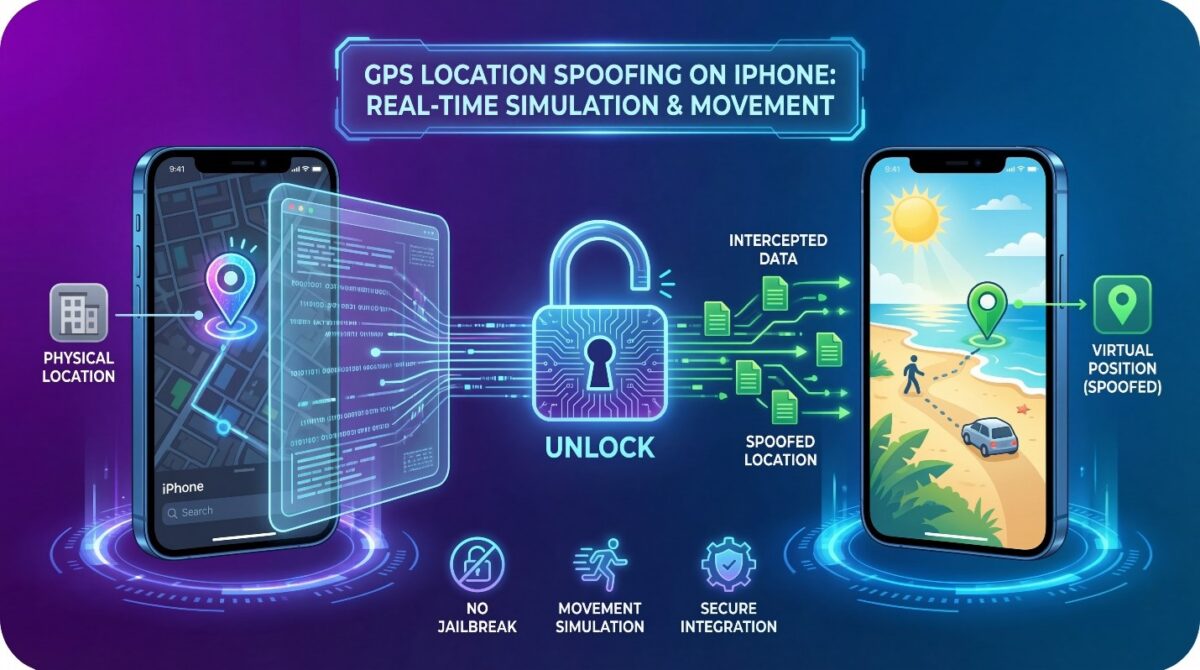
Spoofing GPS Location on iPhone involves simulating coordinates so that apps perceive the device as being somewhere else. This does not alter your physical location but modifies the GPS data fed to apps in real time.
Spoofing tools work by intercepting the location data your iPhone provides. Instead of sending your actual coordinates, the tool injects a custom GPS location. This allows apps to operate as if the device is in the spoofed position.
Some advanced tools go further by simulating movement. They create a virtual path that mimics walking, driving, or cycling. This approach is especially useful for games or fitness apps that track movement. By following realistic speed and distance patterns, the spoofed location appears natural and avoids detection.
Modern spoofers also integrate with iOS securely. No jailbreaking or system modifications are required, which keeps the device protected. They maintain normal functionality while the location is changed temporarily.
It’s important to note that not all spoofing methods are safe. Simple “teleport” hacks or unverified apps may trigger detection in apps like Pokémon Go or social media check-ins. Reliable tools focus on realistic simulation, cooldown adherence, and iOS compatibility to minimize risk.
By understanding how spoofing GPS Location on iPhone works, users can make informed choices. Using controlled, trustworthy methods ensures apps function correctly while maintaining account safety and iPhone security.
Safe vs Unsafe Methods to Change GPS Location on iPhone
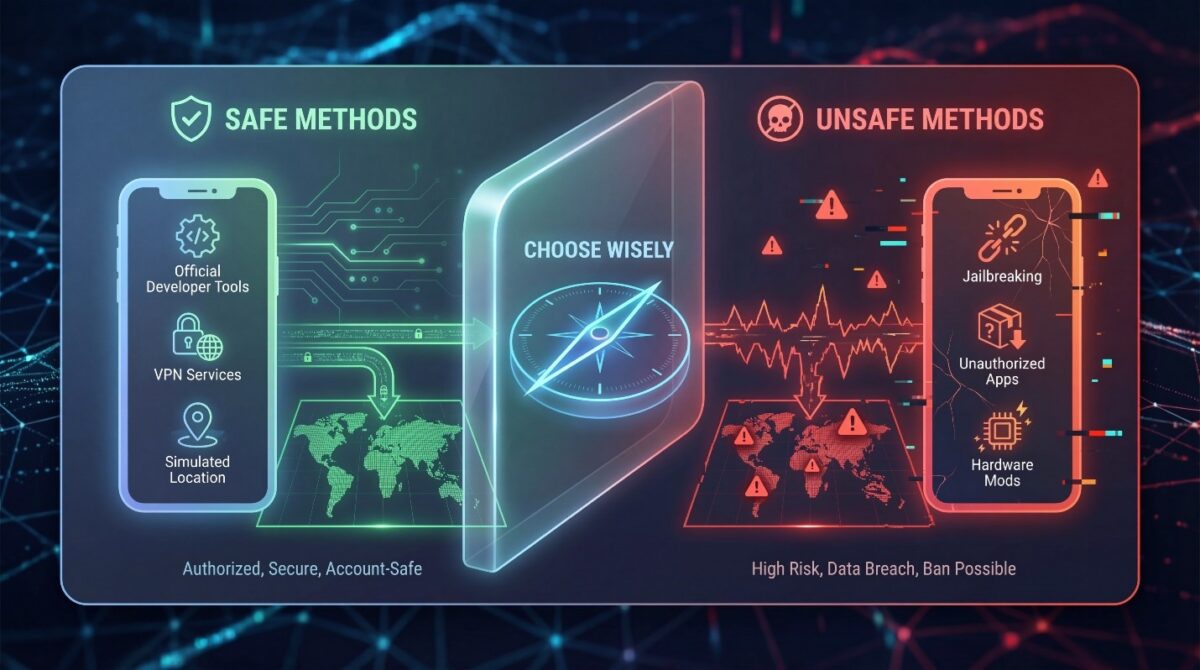
Changing GPS location on iPhone can be done safely or riskily, depending on the method used. Understanding the differences helps protect your device and accounts.
Unsafe Methods to Avoid
- Jailbreaking the Device – Some users attempt location changes by jailbreaking. This exposes iPhone to malware, voids warranty, and can cause app bans.
- Unverified Free Apps – Many free apps claim instant GPS spoofing. They often use unreliable techniques that may trigger detection or crash apps.
- Manual Tweaks in System Files – Editing iOS configuration files is risky and can corrupt the system. Only experienced developers should attempt this, and even then, it’s not recommended.
Safe and Recommended Methods
- Trusted GPS Spoofing Tools – Paid or well-supported apps simulate location without modifying iOS. They follow safe protocols and update regularly.
- No-Jailbreak Simulation – Modern tools use virtual coordinates while keeping your iPhone secure. This approach prevents system instability.
- Controlled Movement Simulation – Tools that replicate walking or driving patterns reduce detection risk in location-based apps.
- Temporary Location Changes – Reverting to the real location after usage keeps devices safe and apps functioning normally.
Safe methods focus on realistic movement, system integrity, and app compatibility, while unsafe methods prioritize shortcuts at the expense of risk. Choosing the right approach ensures GPS spoofing is effective and secure.
Preparing Your iPhone Before Changing GPS Location
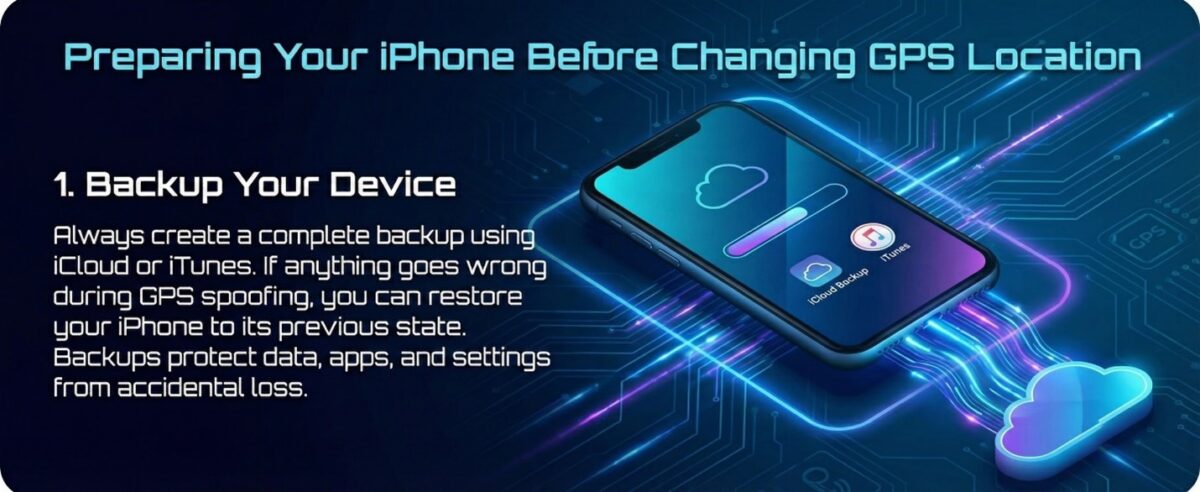
Before attempting to change your GPS Location on iPhone, proper preparation ensures safety and prevents errors. Follow these essential steps to get your iPhone ready.
1. Backup Your Device
Always create a complete backup using iCloud or iTunes. If anything goes wrong during GPS spoofing, you can restore your iPhone to its previous state. Backups protect data, apps, and settings from accidental loss.
2. Update iOS and Apps
Ensure your iPhone is running the latest iOS version and all apps are updated. Many GPS spoofing tools rely on compatibility with current software. Outdated systems may cause crashes or detection issues.
3. Review Location Permissions
Check which apps have access to your GPS location. Limit permissions for apps that don’t require constant tracking. This prevents conflicts and reduces unnecessary exposure while using a location spoofer.
4. Disable Background Location Services (Optional)
Some users disable background location updates temporarily to avoid conflicts. While optional, it can help prevent apps from detecting rapid or unusual location changes.
5. Choose a Trusted GPS Spoofing Tool
Research and select a reliable location changer. Trusted apps follow safe protocols, provide realistic movement simulation, and avoid modifying the system. Avoid unverified tools or “free hacks” that can compromise your iPhone.
By following this checklist, you prepare your iPhone for safe and effective GPS location management. Preparation reduces risks, ensures smoother operation, and protects both your device and accounts.
Best Practices for Long-Term GPS Location Control
Managing GPS location safely over time requires strategy and consistency. Following best practices ensures your iPhone remains secure and apps function properly while using a location spoofer.
Simulate Natural Movement
Avoid sudden or unrealistic location jumps. Gradual movement patterns, like walking or driving at normal speeds, make spoofed GPS appear more authentic. This is especially important for apps that track distance or monitor location patterns.
Limit Teleporting Between Regions
Frequent jumps between countries or cities can trigger detection mechanisms in apps. Use teleportation sparingly and combine it with realistic movement simulations. This reduces the risk of account restrictions or temporary bans.
Monitor App Behavior Regularly
Keep an eye on app responses after changing location. Delayed updates, errors, or sudden logouts may indicate detection risks. Adjust your spoofing habits if you notice irregularities.
Revert to Real Location Periodically
Switch back to your actual GPS location when not actively using a spoofer. This practice maintains device integrity and prevents long-term tracking anomalies.
Keep Tools and iOS Updated
Spoofing tools and iOS updates improve compatibility, fix bugs, and reduce detection risks. Regularly update both to maintain a safe and smooth GPS spoofing experience.
By implementing these practices, users can maintain long-term control over GPS location safely. Consistency, realism, and awareness are key to protecting both your iPhone and your app accounts.
Final Thoughts on Managing GPS Location Responsibly
GPS location is an essential part of iPhone functionality, enabling navigation, gaming, social media, and many other apps. However, it also raises privacy concerns and can limit access to certain region-based features. Understanding how GPS works and how to control it responsibly is crucial for any iPhone user.
Safe GPS location management is about balance. It combines privacy protection, app accessibility, and realistic usage patterns. Using a trusted location changer allows users to simulate movement, unlock features, and maintain control without compromising device security.
Awareness of common myths, risks, and proper preparation reduces mistakes. Following best practices ensures your iPhone functions normally while using a spoofer, and prevents app detection or potential bans.
Whether you are exploring location-based games, testing apps, or simply safeguarding your privacy, informed GPS management is the key. Tools like iGPS Spoofer provide a reliable way to adjust GPS location safely on iPhone, but responsible use ultimately determines success.
In conclusion, GPS location control empowers users, but it requires knowledge, careful planning, and adherence to safe methods. By combining understanding with proper tools, iPhone users can enjoy the benefits of location flexibility while keeping their devices secure.