News
WhatsApp Last Seen History: What Users Assume vs What WhatsApp Actually Stores
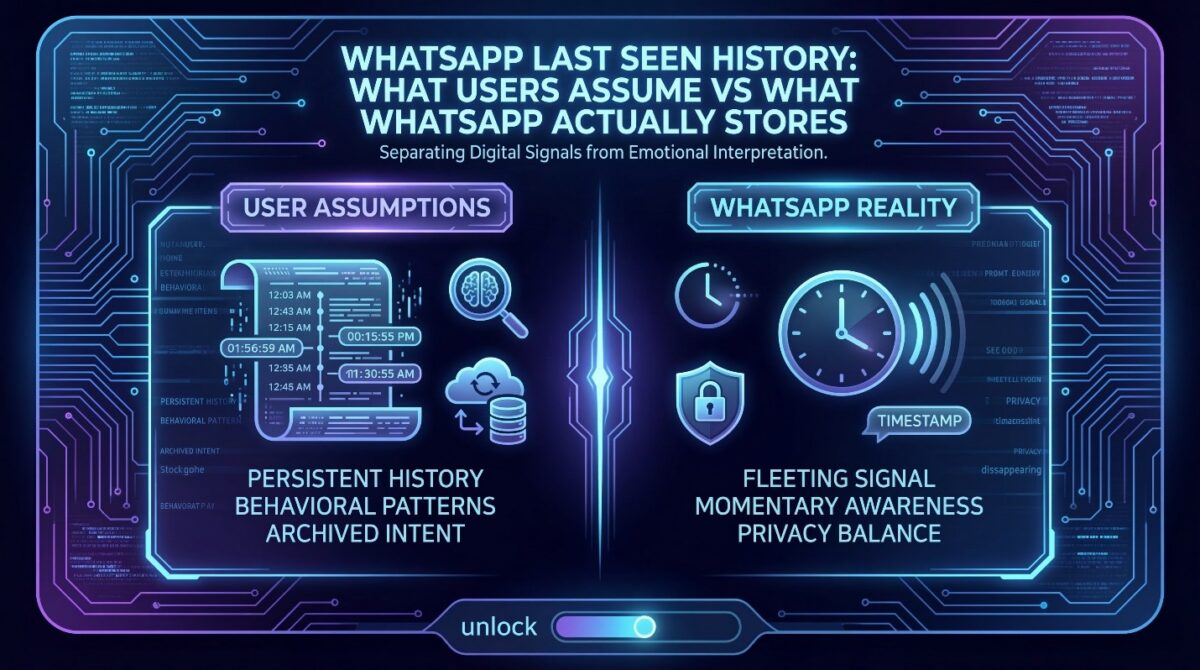
Many users believe WhatsApp last seen history quietly records availability patterns, creating assumptions about responsiveness, attention, and intent. This belief grows because digital time indicators feel persistent, even when platforms present them temporarily.
Over time, repeated exposure trains users to treat last seen like stored history rather than a fleeting signal.
The phrase “WhatsApp last seen history” suggests archived activity, timelines, and retrievable records that users assume exist somewhere. In reality, messaging platforms balance visibility with privacy, often limiting what is retained behind the interface.
This disconnect between interface cues and backend behavior fuels widespread misunderstanding across personal and professional communication contexts.
Understanding what WhatsApp actually stores requires separating emotional interpretation from technical design decisions. Status indicators are optimized for momentary awareness, not long-term behavioral tracking or historical analysis.
Clarifying this distinction helps users interpret online signals accurately without projecting unintended meaning onto simple system updates.
H2: Why the Idea of WhatsApp Last Seen History Exists in the First Place

Many users naturally assume WhatsApp last seen history exists because digital interfaces often resemble timelines rather than temporary indicators. Repeated exposure to time-based labels creates the impression of continuity, even when the system only reflects a single recent moment.
This assumption is reinforced by everyday digital experiences where platforms store activity logs, usage records, and behavioral histories automatically. When users see consistent timestamps, their minds intuitively group them into patterns, despite WhatsApp never presenting an actual historical archive.
Human Pattern Recognition and Digital Time Stamps
Humans instinctively search for patterns, especially when information is presented with dates, times, or repeated visual cues. WhatsApp last seen timestamp triggers this instinct, leading users to infer trends, habits, or availability cycles that the app never records.
Once users begin mentally tracking these timestamps, memory replaces actual data storage within the system. Over time, remembered moments feel like retrievable history, even though they are reconstructed impressions rather than stored records.
How Messaging Apps Create a Sense of Continuity Without Records
Messaging applications rely on momentary indicators to provide social context without maintaining detailed behavioral histories. WhatsApp last seen is designed to signal recent activity, not to document longitudinal presence or engagement patterns.
Because these indicators update quietly and repeatedly, users perceive continuity where none technically exists. The interface prioritizes simplicity and privacy, but human interpretation fills gaps with assumed data retention that the system intentionally avoids.
H2: What WhatsApp Last Seen Actually Shows When You See “Last Seen”

When users view a WhatsApp last seen label, they are observing a single system-generated timestamp, not a timeline of past activity. This indicator reflects the most recent moment the application connected to WhatsApp servers. It is designed for immediate context, not long-term behavioral interpretation.
The WhatsApp last seen display functions as a transient signal that updates dynamically based on app usage and connectivity conditions. It does not summarize usage duration, frequency, or engagement patterns. Despite this, users often treat the indicator as a reliable measure of attention or availability.
WhatsApp intentionally keeps the visual representation minimal to reduce data exposure and prevent over-analysis. The interface provides just enough information to signal recent presence without revealing deeper activity details.
This simplicity, however, encourages users to infer more meaning than the system actually provides.
The Moment-Based Nature of WhatsApp Status Indicators
WhatsApp status indicators operate on moment-based logic rather than continuous tracking mechanisms. The last seen time updates only when specific triggers occur, such as app opening or background connectivity changes. It does not record every interaction, message read, or passive online moment.
Because updates appear intermittently, users may misjudge accuracy and consistency. Network delays, background restrictions, and device settings can influence when timestamps refresh. These technical factors further distance WhatsApp last seen indicators from representing true real-time activity or stored historical behavior.
H2: What WhatsApp Actually Shows When You See “Last Seen”
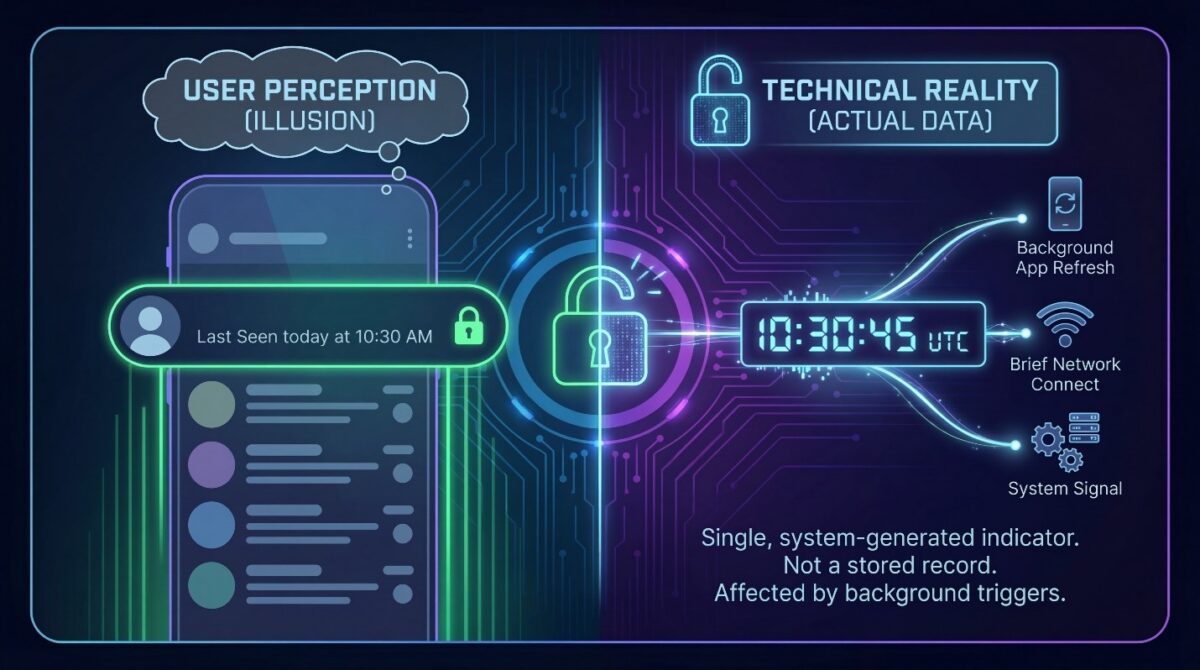
When users see a WhatsApp last seen timestamp, they are viewing a single system-generated indicator, not a stored activity record. This timestamp reflects the most recent moment the app detected user interaction, not continuous presence or deliberate availability. The system updates this value dynamically without preserving older values.
WhatsApp last seen functions as a surface-level signal designed to offer brief contextual awareness during conversations. It does not confirm how long someone was active, what they were doing, or whether they were intentionally available. The simplicity of this indicator often masks how limited the underlying data truly is.
Many users assume the WhatsApp last seen value updates only when someone opens WhatsApp intentionally. In practice, background activity, app refreshes, and brief network connections can trigger timestamp changes without meaningful engagement.
This technical behavior contributes heavily to misunderstanding perceived user activity patterns.
The Moment-Based Nature of WhatsApp Status Indicators
WhatsApp last seen status indicators are engineered to represent moments rather than durations, emphasizing immediacy instead of historical continuity. The system captures a point-in-time interaction and replaces the previous timestamp entirely, leaving no retained sequence.
This replacement-based logic prevents any form of internal last seen history accumulation.
Each time the WhatsApp last seen value is updated, the previous timestamp is discarded at the interface level. Users never receive access to past values because they are not preserved for retrieval or review. The design prioritizes lightweight signaling rather than persistent behavioral documentation.
This moment-based approach aligns with WhatsApp’s broader privacy and data minimization philosophy. By avoiding long-term storage of activity indicators, the platform reduces interpretive risk, limits data exposure, and discourages surveillance-driven usage behaviors among everyday users.
H2: What WhatsApp Actually Shows When You See “Last Seen”
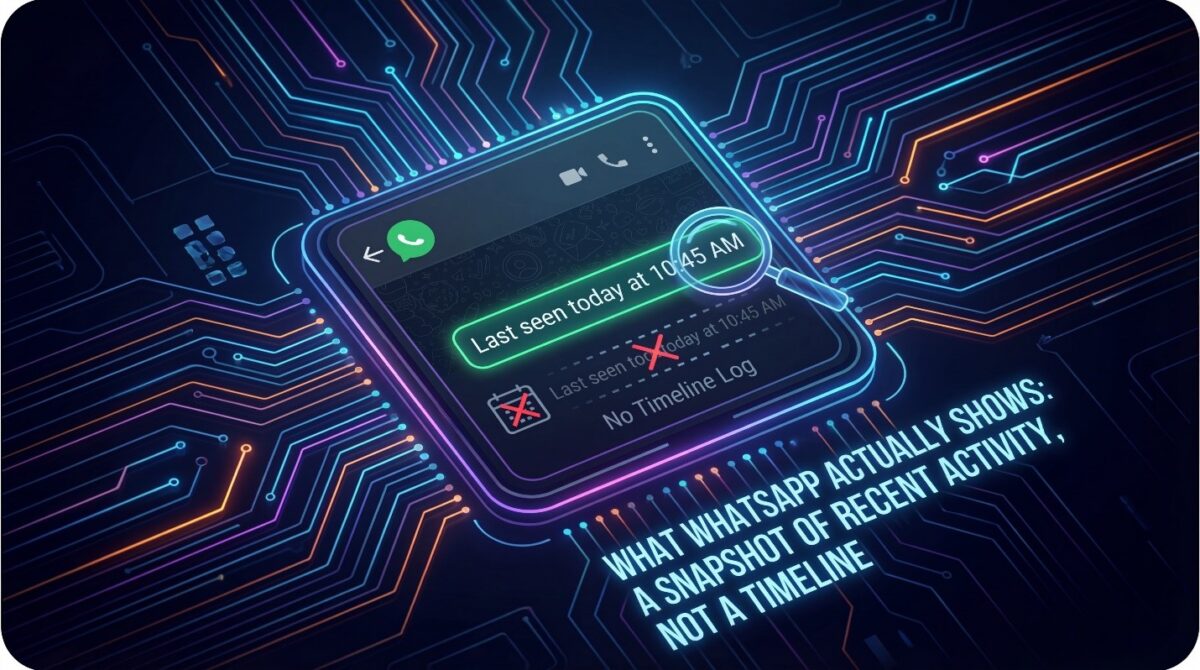
Many users interpret the WhatsApp last seen label as a historical record of activity, but technically, WhatsApp only shows a snapshot of the most recent activity. This timestamp indicates the last moment a user opened the app or was actively connected, and it does not create a retrievable timeline of prior usage.
The platform focuses on momentary awareness for privacy and functionality. While users see the same status repeatedly, these timestamps are not stored in a log for future reference. Understanding this distinction is key to interpreting online presence accurately without assuming continuity that doesn’t exist.
Moment-Based Status Indicators
WhatsApp last seen timestamps are updated only when a user interacts with the app. Opening a chat, sending a message, or being connected online triggers a momentary status refresh. Each indicator reflects the current session, not historical activity.
As WhatsApp last seen timestamps are temporary, the system discards prior values rather than maintaining a history. Users may perceive a pattern if they check at consistent intervals, but this is psychological projection, not an actual record maintained by WhatsApp.
Differences Between Online and Last Seen
The “online” label and the last seen timestamp serve different purposes. Online status is real-time, visible only when the app is actively open, while WhatsApp last seen is the last recorded moment the user was active. Confusing these two leads many users to think the system logs continuous activity.
Additionally, the online indicator disappears immediately when a user closes the app, reinforcing the temporary nature of status signals. WhatsApp last seen, though persistent for a short duration, never forms a detailed historical record, contrary to common assumptions.
Why Users Perceive History
Repeatedly observing the same timestamp or noticing subtle patterns can make users feel as if WhatsApp is maintaining a continuous log. This perception is reinforced by memory and human pattern recognition, where the mind fills gaps in data with assumed continuity.
Even when WhatsApp last seen timestamps change, users may reconstruct previous moments in their memory, giving the impression of a stored history. This explains why many confidently discuss last seen trends, despite no actual historical data being available from WhatsApp itself.
H2: What WhatsApp Does NOT Store About Your Last Seen Activity
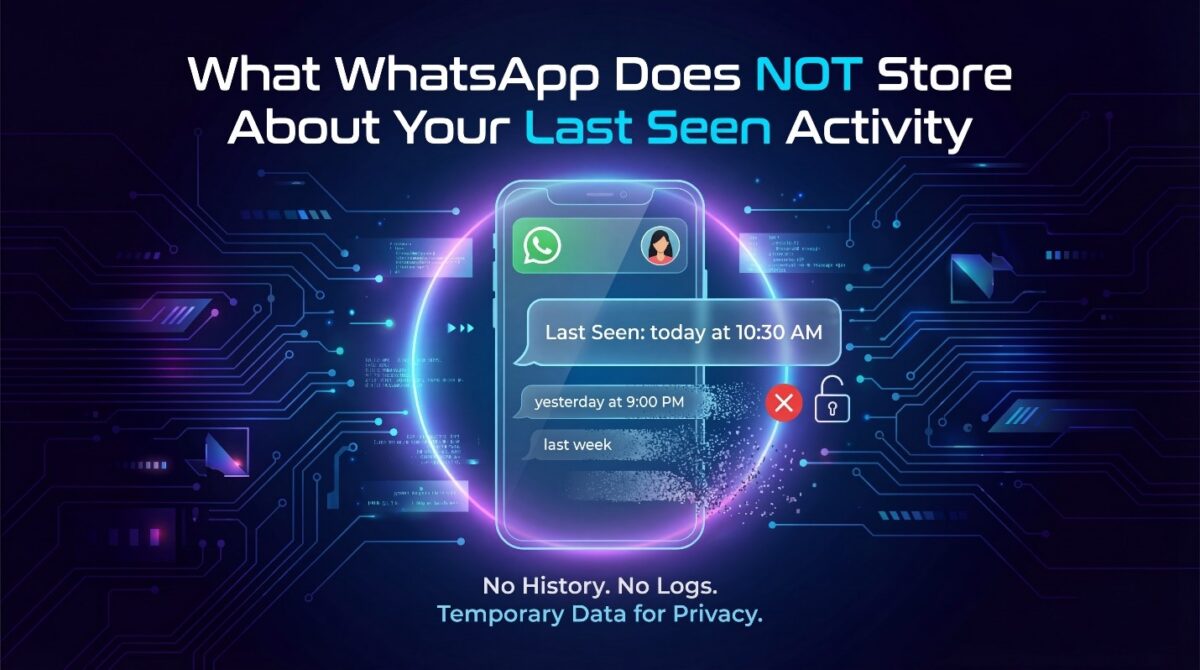
Many users assume that WhatsApp archives a detailed history of their online behavior, but in reality, the app does not maintain past WhatsApp last seen records. Each timestamp is temporary, reflecting only the most recent activity, and once updated, the previous data is discarded.
This design preserves user privacy and prevents long-term behavioral tracking.
Because WhatsApp emphasizes privacy, there is no user-accessible log showing when someone was online over days or weeks. The platform intentionally avoids storing longitudinal activity data, ensuring that status indicators are momentary and that users’ digital footprints remain minimal.
Misinterpretation arises when repeated observation creates an illusion of continuous history.
Temporary Signals vs Persistent Data
The WhatsApp last seen timestamp functions as a momentary signal, not as a record. It is updated whenever a user engages with the app, and the previous timestamp is overwritten. While users may notice recurring times or patterns, these impressions are purely observational and not stored in the system.
This approach ensures that WhatsApp remains compliant with privacy standards, as retaining detailed user activity logs could compromise trust. By keeping WhatsApp last seen data ephemeral, the platform balances utility with confidentiality.
Why Users Cannot Access Past Last Seen Records
Users frequently attempt third-party tools or screenshots to “track history,” but WhatsApp itself does not provide historical last seen data. Any appearance of history is generated by user memory or external observation, not by actual app storage.
Even analytics or monitoring apps cannot access this information legitimately because it simply does not exist on WhatsApp servers. Understanding this limitation is crucial for users who wish to avoid misinterpretation or reliance on unreliable methods.
Misconceptions About Data Retention
It is common to assume that WhatsApp archives all user activity for some duration. This misconception likely comes from experiences with other apps that do retain long-term logs. However, WhatsApp’s architecture is intentionally minimalist, keeping data transient to respect user privacy and system efficiency.
By clarifying these limitations, users can avoid false expectations and understand that last seen indicators are functional cues, not historical records, and that assumptions about stored data are inaccurate.
H2: How Privacy Design Shapes WhatsApp’s Data Retention Choices
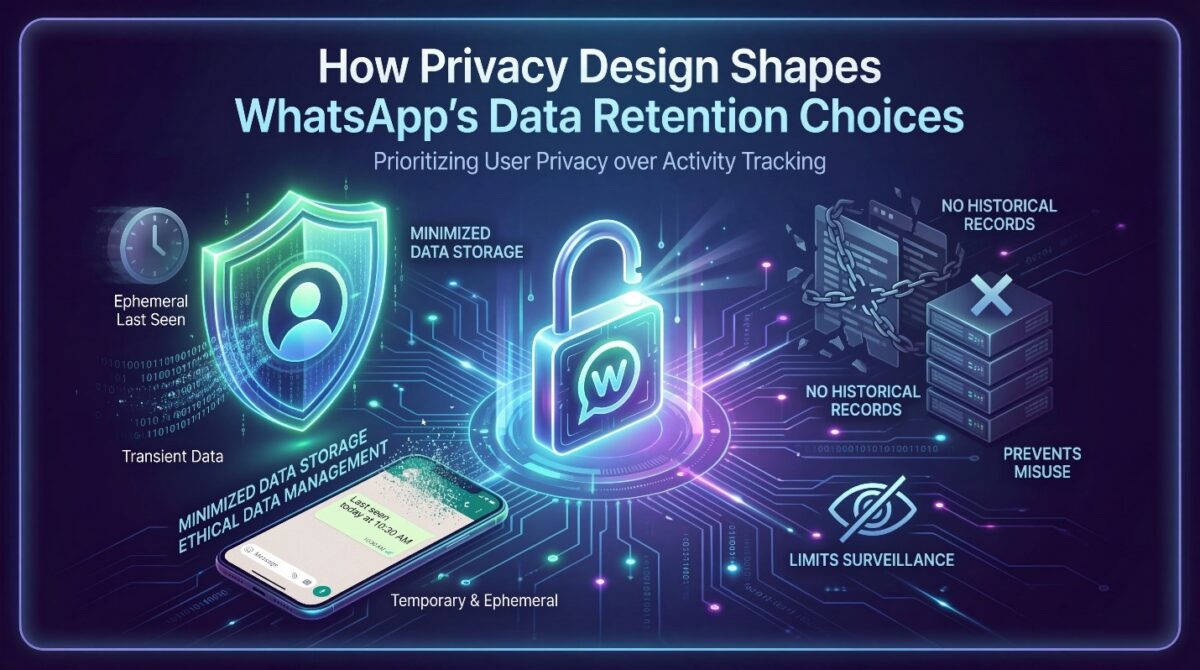
WhatsApp’s design philosophy prioritizes user privacy over detailed activity tracking, which is why last seen indicators remain temporary and ephemeral. The app limits how much data is stored to prevent misuse, minimize exposure to third-party monitoring, and maintain user trust.
Understanding these privacy-driven choices explains why the system avoids creating historical last seen records.
By keeping status data transient, WhatsApp ensures that users’ digital footprints are not accumulated over time. Even frequent interactions with the app do not generate long-term logs.
This approach balances the need for real-time awareness with ethical data management, allowing users to communicate confidently without worrying about extensive surveillance.
Why Storing Activity History Conflicts With Privacy Goals
Maintaining long-term WhatsApp last seen history could inadvertently expose sensitive behavioral patterns. For example, access to extended activity logs might reveal personal routines, sleeping schedules, or work habits.
WhatsApp mitigates this risk by only showing the most recent activity, preventing third parties and even the app itself from retaining data beyond the immediate context.
This minimalistic retention strategy reinforces trust, ensuring users feel secure while using the platform for personal and professional communication. Privacy and usability are carefully balanced, with the system designed to provide awareness without compromising confidentiality.
The Role of Minimal Data Retention in Messaging Platforms
Modern messaging apps increasingly adopt ephemeral data strategies to comply with privacy regulations and user expectations. WhatsApp’s choice to avoid storing historical last seen data aligns with global privacy trends, ensuring that users’ online behaviors remain private by default.
This minimal retention also simplifies data management for the platform, reduces server load, and prevents potential misuse of stored information. Users benefit from a system that respects boundaries while still delivering essential functionality.
Why WhatsApp Avoids Behavioral Logging by Design
Behavioral logging, while useful for analytics, can compromise trust and create privacy concerns. By avoiding detailed tracking, WhatsApp minimizes the risk of surveillance or exploitation of personal information.
Users gain peace of mind knowing their last seen activity is momentary and not archived, which is central to the platform’s privacy-first philosophy.
This design ensures that social interactions are focused on communication rather than monitoring, reinforcing WhatsApp’s commitment to secure and respectful messaging.
H2: Where User Assumptions Go Wrong
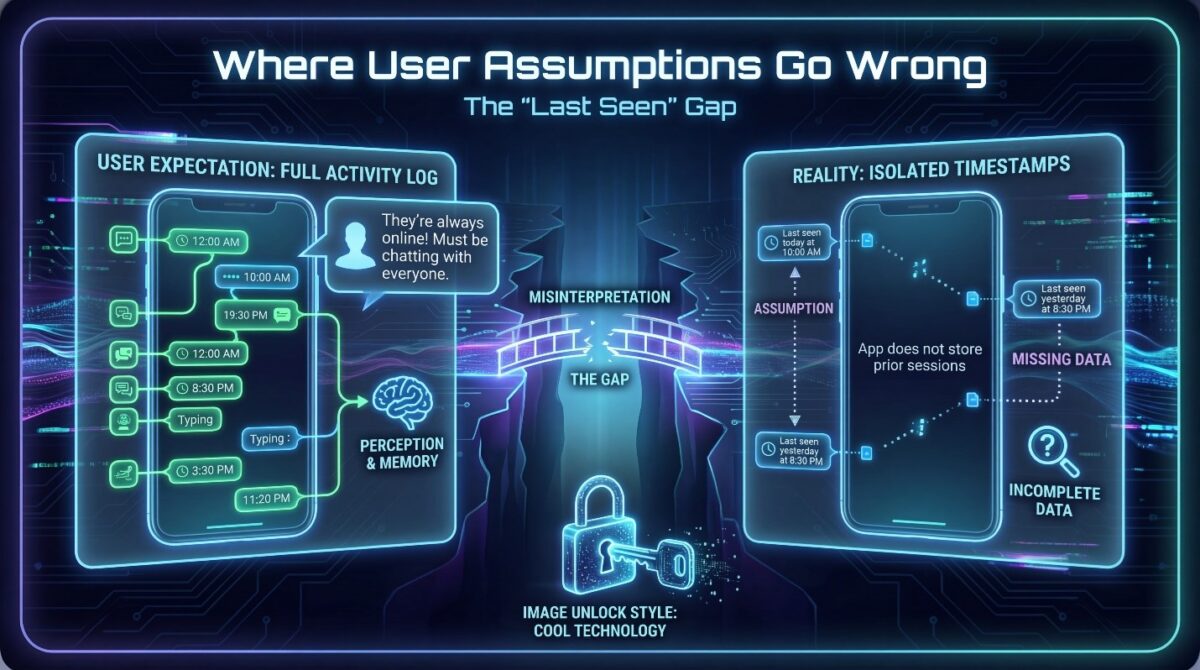
Many WhatsApp users believe WhatsApp last seen history reflects a full log of activity, but these assumptions often lead to misinterpretation. Observing repeated timestamps or perceived patterns can create a false sense of continuity, even though the app does not store prior sessions.
This gap between expectation and reality drives common misunderstandings about digital presence.
Humans tend to fill in missing information with assumptions, particularly when data is incomplete or ambiguous. When checking last seen timestamps regularly, users unintentionally construct narratives about others’ availability, responsiveness, or habits.
These narratives feel real, yet they are products of memory and perception rather than factual data stored by WhatsApp.
Confusing Visibility With Storage
One common mistake is equating momentary visibility with historical storage. Just because a timestamp appears consistent over time does not mean the app retains all prior data. WhatsApp last seen only reflects the most recent interaction and is overwritten with each new activity, leaving no record of previous statuses.
Users often misread repeated appearances as stored history, assuming patterns that the system does not actually log. This distinction is essential for understanding the limitations of digital indicators and avoiding false interpretations.
Assuming All Digital Signals Are Logged Forever
Another widespread assumption is that any visible signal online is automatically logged for future reference. In reality, WhatsApp focuses on ephemeral status updates, intentionally discarding prior timestamps.
Users who rely on memory or screenshots to reconstruct history may believe they are accessing stored data, but these methods only capture snapshots, not comprehensive records.
Understanding this difference prevents overreliance on perceived patterns and helps users interpret activity indicators accurately. Recognizing the limitations of last seen data also mitigates miscommunication and unnecessary concern in personal or professional interactions.
Overestimating Third-Party Capabilities
Some users assume third-party apps can provide historical last seen records. While certain tools claim to monitor activity, they often rely on observation rather than actual data storage. They cannot access WhatsApp’s internal servers or retrieve past timestamps because such records do not exist.
Believing in these tools can lead to misinformation or false confidence in tracking others’ activity. Education about system limitations is crucial to prevent misuse, misunderstandings, and privacy risks.
H2: Why Users Still Want Access to Last Seen History

Despite the technical limitations, many users remain interested in WhatsApp last seen history due to social, personal, and professional motivations. The desire to know when someone was active stems from trust, availability, and relationship dynamics.
People often interpret these timestamps as indicators of responsiveness, reliability, or engagement, even though no historical record exists.
In professional contexts, knowing when colleagues or clients were last online can influence communication strategies and expectations. For social interactions, users may feel reassured or frustrated based on perceived activity patterns.
These psychological and social drivers explain why the concept of last seen history persists despite the lack of actual storage.
Trust, Relationships, and Digital Availability Expectations
Many people equate consistent activity with attentiveness or interest. Observing last seen timestamps can create assumptions about others’ priorities, even if the data is only momentary. This can affect both friendships and professional relationships, shaping communication habits and expectations.
The desire to track activity is often reinforced by human curiosity and the need for social signals. Users interpret availability as part of broader social cues, seeking reassurance about reliability, engagement, and accessibility.
However, the system’s design intentionally limits this information to avoid overexposure and protect privacy.
Professional and Personal Use Cases
In business settings, last seen indicators may seem useful for coordinating responses, scheduling communication, or assessing engagement levels. Similarly, socially, people may monitor activity to gauge responsiveness among friends or family.
While these use cases are understandable, they rely on assumed historical data rather than actual stored timestamps.
Educating users about the limitations of WhatsApp last seen ensures more realistic expectations. Recognizing that no archival data exists prevents misunderstandings, reduces unnecessary monitoring, and promotes healthier communication habits across both personal and professional spheres.
H2: Can Any System Truly Reconstruct WhatsApp Last Seen History?

Many users wonder whether third-party apps or advanced monitoring systems can reconstruct WhatsApp last seen history. The short answer is no, because WhatsApp does not store past timestamps on its servers.
Any attempt to access historical data relies on external observation rather than internal records, meaning no system can fully recreate past activity with complete accuracy.
Attempts to monitor last seen often involve repeated checking, screenshots, or notifications from third-party services. While these methods can provide limited insights into recent behavior, they cannot produce a comprehensive or reliable history, as the app itself discards older timestamps to protect user privacy.
Users relying on such tools may inadvertently interpret incomplete or misleading data as actual historical records.
Why External Observation Is Not the Same as Stored History
Monitoring someone’s online status externally only captures snapshots of activity at specific points in time. It does not provide access to prior interactions or full historical logs, meaning any reconstruction is partial and inherently unreliable.
Even if repeated observation suggests patterns, these inferences are based on probability rather than stored evidence. Users may feel confident interpreting trends, but they are essentially working with limited observational data rather than authentic WhatsApp records.
Technical and Ethical Boundaries of Activity Reconstruction
From a technical perspective, reconstructing last seen history is impossible because WhatsApp never retains it. Ethical considerations also limit the collection of such data, as invasive tracking can violate privacy norms and user trust. Any tool claiming otherwise should be approached with caution.
Understanding these limitations helps users set realistic expectations. Recognizing that last seen history cannot be reconstructed preserves trust, reduces unnecessary monitoring, and highlights the importance of respecting digital boundaries.
H2: Understanding WhatsApp Last Seen Without Over-Interpreting It

Interpreting WhatsApp last seen requires separating assumptions from system reality. Many users project behavioral patterns onto timestamps, believing they reveal detailed activity histories.
In truth, last seen only reflects the most recent interaction, and no archival data exists. Recognizing this distinction helps users avoid misinterpretations and maintain healthy communication expectations.
Accurately reading last seen indicators involves focusing on momentary signals rather than imagined trends. Users should resist the temptation to infer continuous patterns from isolated observations.
By understanding that these timestamps are ephemeral and functional, individuals can better navigate messaging interactions without undue anxiety or false assumptions.
Interpreting Status Indicators More Realistically
Instead of attempting to track every timestamp, users should treat last seen as a real-time indicator of availability. Observing trends occasionally can be informative, but reliance on perceived history often leads to misjudgments about responsiveness or attention.
This perspective encourages mindful interaction with digital communication tools. It reinforces the idea that WhatsApp prioritizes privacy, ensures minimal data retention, and provides users with momentary context rather than historical insight.
Reducing Miscommunication and Unnecessary Monitoring
Understanding the temporary nature of last seen helps prevent over-monitoring or intrusive behavior. Users can communicate effectively without obsessing over timestamps, fostering trust and maintaining boundaries.
By adjusting expectations, both personal and professional relationships benefit from clearer and more realistic interpretations of online activity.
H2: Conclusion
WhatsApp last seen history is widely misunderstood, as users often assume it records long-term activity patterns. In reality, the app only shows the most recent timestamp, discarding prior data to protect privacy and minimize digital footprints.
Misinterpretation arises from psychological patterns, repeated observation, and assumptions about stored activity.
Understanding what WhatsApp actually stores allows users to navigate online interactions more confidently. Momentary status indicators provide context without revealing a continuous history.
Educating oneself about these limitations helps reduce false assumptions, unnecessary monitoring, and miscommunication in both personal and professional settings.
Ultimately, separating perception from reality is essential for using WhatsApp effectively and responsibly. By recognizing that last seen is functional, ephemeral, and privacy-focused, users can interact more intelligently and maintain healthy digital relationships.
To address the curiosity around long-term activity, Goooch has developed LastSeen Notify, a tool that allows users to track and monitor last seen history over time, providing insights beyond WhatsApp’s default ephemeral status.